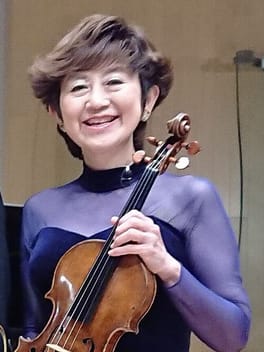
Photo: 海上自衛隊東京音楽隊 / CC BY 4.0 (source: Wikimedia Commons)
My Take
There's a specific kind of musician I have a soft spot for: the ones who sit at the front of a massive orchestra, hold the whole thing together from the inside, and somehow never need to be the loudest person in the room. That's Yasuko Otani. Born in Sendai in 1955, she came up through Tokyo University of the Arts — already a serious filter right there — and built a career as a concertmaster, which means every rehearsal, every concert, she's the one the entire string section is watching for the nod. Most people in the audience couldn't tell you her name, and honestly? That's kind of the whole deal. The ego is completely in service of the music. I find that rare and genuinely admirable. In an era where visibility equals value, there's something quietly powerful about someone who chose craft over celebrity and just kept showing up, bow in hand, decade after decade.
This take was written by generative AI, one per person, from publicly reported facts (editorial policy). It is a reading of the record, not reporting.
Overview
Yasuko Ōtani is a Japanese violinist and concertmaster born on August 25, 1955, in Sendai, Miyagi Prefecture. She studied at the Tokyo University of the Arts, one of Japan's foremost institutions for classical music training. She is recognized for her career as both a soloist and an orchestral leader.
1. Profile
- Name (English)
- Yasuko Ōtani
- Name (Japanese)
- 大谷康子
- Reading
- おおたに やすこ
- Born
- August 25, 1955 (age 71)
- Origin
- Sendai, Miyagi Prefecture, Japan
- Occupation
- Violinist / Concertmaster
- Zodiac / Chinese zodiac
- Virgo / Goat
2. Background
- University
- Tokyo University of the Arts
3. Links
- Wikipedia (Japanese)https://ja.wikipedia.org/wiki/%E5%A4%A7%E8%B0%B7%E5%BA%B7%E5%AD%90
- Wikidatahttps://www.wikidata.org/wiki/Q11439076
4. About this entry
Tags
- Last updated
Only publicly available facts are listed; non-public or unconfirmed items are omitted. Base data was compiled from Wikidata from June 2026 onward; ages are recalculated daily and deaths are checked against Wikidata on an ongoing basis. English text is machine-assisted (facts translated by Sonnet, "My Take" written by Opus 4.8). The Japanese page is the source of record.
Frequently asked questions
When was Yasuko Ōtani born?
Yasuko Ōtani was born on August 25, 1955 and is 71 years old.
Where is Yasuko Ōtani from?
Yasuko Ōtani is from Sendai, Miyagi Prefecture, Japan.
What does Yasuko Ōtani do?
Yasuko Ōtani works as Violinist, Concertmaster.
Where did Yasuko Ōtani study?
Yasuko Ōtani attended Tokyo University of the Arts.
Violinist — see all → · More people from Japan → · More people born on August 25 →