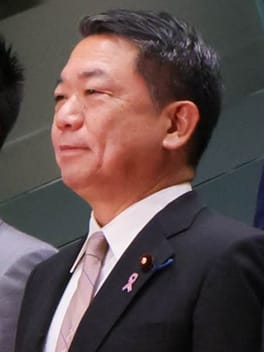
Photo: Cabinet Public Affairs Office, Cabinet Secretariat / CC BY 4.0 (source: Wikimedia Commons)
My Take
Yasukuni Kinjō is the kind of politician whose whole identity feels rooted in a single place — born in Naha in 1969, educated at Okinawa International University, and apparently never strayed too far from where he started. That's not a knock; if anything, it takes a particular kind of commitment to build a political career in Okinawa, where local issues sit in this complicated, layered tension with the national government that most mainland politicians can sidestep entirely. He doesn't have the flashy public profile of a media-savvy politician; his record is a steady climb from the Urasoe city council to the prefectural assembly and on to three terms in the House of Representatives. But that low profile might be exactly the point: some people are doing the actual work without performing it.
This take was written by generative AI, one per person, from publicly reported facts (editorial policy). It is a reading of the record, not reporting.
Overview
Yasukuni Kinjō is a Japanese politician born on July 16, 1969, in Naha, Okinawa Prefecture. He graduated from Okinawa International University before entering a career in politics. He is based in Okinawa, a region with a distinct political and historical context within Japan. A member of Komeito, he served two terms on the Urasoe city council and one in the Okinawa Prefectural Assembly before entering the House of Representatives in 2021, where he is in his third term, and he has served as parliamentary vice-minister of education.
1. Profile
- Name (English)
- Yasukuni Kinjō
- Name (Japanese)
- 金城泰邦
- Reading
- きんじょう やすくに
- Born
- July 16, 1969 (age 57)
- Origin
- Naha, Okinawa Prefecture, Japan
- Occupation
- Politician
- Zodiac / Chinese zodiac
- Cancer / Rooster
2. Background
- University
- Okinawa International University
3. Links
4. About this entry
Tags
- Last updated
Only publicly available facts are listed; non-public or unconfirmed items are omitted. Base data was compiled from Wikidata from June 2026 onward; ages are recalculated daily and deaths are checked against Wikidata on an ongoing basis. English text is machine-assisted (facts translated by Sonnet, "My Take" written by Opus 4.8). The Japanese page is the source of record.
Frequently asked questions
When was Yasukuni Kinjō born?
Yasukuni Kinjō was born on July 16, 1969 and is 57 years old.
Where is Yasukuni Kinjō from?
Yasukuni Kinjō is from Naha, Okinawa Prefecture, Japan.
What does Yasukuni Kinjō do?
Yasukuni Kinjō works as Politician.
Where did Yasukuni Kinjō study?
Yasukuni Kinjō attended Okinawa International University.
Politician — see all → · More people from Japan → · More people born on July 16 →