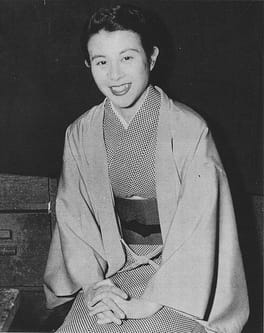
Photo: Unknown author / Public domain (source: Wikimedia Commons)
My Take
I'll be honest, Yoshiko Kuga is the kind of actress I find myself quietly in awe of rather than loudly excited about, and that's exactly the point. Born in Tokyo in 1931 into a genuinely aristocratic family, she carried a poise on screen that you simply cannot fake, and at barely 153cm she still anchored every frame she stepped into. She worked with the giants of postwar Japanese cinema, including Kurosawa, and what gets me is how little she had to do to land a feeling. No shouting, no theatrics, just a shadow crossing the eyes or a small shift of the hands. That restraint is its own kind of confidence. A career stretching into a Tanaka Kinuyo Award in 1995 says everything about her staying power. She passed in 2024, but that calm, dignified beauty stays put for me.
This take was written by generative AI, one per person, from publicly reported facts (editorial policy). It is a reading of the record, not reporting.
Overview
Yoshiko Kuga (January 21, 1931 – June 9, 2024) was a Japanese actress born in Ushigome, Tokyo. The daughter of a marquess, she appeared in films such as Kurosawa's The Idiot, An Inlet of Muddy Water and Ozu's Equinox Flower, and won the Blue Ribbon Award for Best Supporting Actress in 1957. In 1995 she received the Tanaka Kinuyo Award in recognition of her long and distinguished career in Japanese cinema.
1. Profile
- Name (English)
- Yoshiko Kuga
- Name (Japanese)
- 久我美子
- Reading
- くが よしこ
- Born
- January 21, 1931 – June 9, 2024
- Origin
- Ushigome, Tokyo, Japan
- Height
- 153cm
- Occupation
- Actress / Film Actress
- Zodiac / Chinese zodiac
- Aquarius / Goat
- Agency
- Watanabe Entertainment
- Active years
- 1946 - 2000
2. Background
Awards & achievements
- 1957: Blue Ribbon Award for Best Supporting Actress
- 1995: Tanaka Kinuyo Award
3. Works & records
Works summary
- Appearances
- 108 (1950–2000)
- By year (titles with a known year)
- 1950: 3, 1951: 1, 1952: 2, 1953: 4, 1954: 5, 1955: 2, 1956: 3, 1957: 3, 1958: 5, 1959: 2, 1960: 1, 1961: 2, 1962: 2, 1963: 1, 1964: 2, 1965: 1, 1966: 3, 1967: 2, 1969: 2, 1970: 2, 1972: 1, 1973: 1, 1974: 2, 1975: 1, 1976: 2, 1977: 1, 1978: 1, 1984: 3, 1985: 3, 1986: 5, 1987: 2, 1988: 6, 1989: 5, 1991: 1, 1992: 1, 1993: 2, 1994: 5, 1995: 2, 1996: 1, 1997: 2, 1999: 1, 2000: 1, year unknown: 11
Filmography / notable works
| Category | Title | Year |
|---|---|---|
| Film | 川の流れのように | 2000 |
| TV drama | 天涯の花 | 1999 |
| Film | 東京日和 | 1997 |
| Film | 時をかける少女 | 1997 |
| TV drama | ようこそ青春金物店 | 1996 |
| TV drama | この指とまれ!! | 1995 |
| TV drama | うちの母ですが… | 1995 |
| Film | 119 | 1994 |
| TV drama | 夜の事情 | 1994 |
| TV drama | 欅通りの人びと | 1994 |
| TV drama | 妊娠ですよ | 1994 |
| TV drama | お兄ちゃんの選択 | 1994 |
| Film | 空がこんなに青いわけがない | 1993 |
| TV drama | 課長サンの厄年 | 1993 |
| Film | おこげ | 1992 |
| Film | 無能の人 | 1991 |
| Film | Godzilla vs. Biollante | 1989 |
| Film | 226 | 1989 |
| TV drama | 縁談 | 1989 |
| TV drama | 新・三婆 | 1989 |
| TV drama | 空と海をこえて | 1989 |
| TV drama | 千姫有情、母ありき | 1988 |
| TV drama | Pro Golfer Reiko | 1988 |
| TV drama | 三姉妹は電話がお好き! | 1988 |
| TV drama | スクールガール・セレナーデ 桂華學女小夜曲 | 1988 |
| TV drama | 忠臣蔵・いのちの刻 | 1988 |
| TV drama | 五稜郭 | 1988 |
| TV drama | 花嫁は眠れない | 1987 |
| TV drama | 新ハーイあっこです | 1987 |
| TV drama | 都の風 | 1986 |
| TV drama | いのち | 1986 |
| TV drama | 空の色紙 | 1986 |
| TV drama | ガラスの中の幸福 | 1986 |
| TV drama | 気になる隣の新家族 | 1986 |
| TV drama | はいからさんが通る | 1985 |
| TV drama | 先生助けて! 殺意の教室 | 1985 |
| TV drama | ドラマ人間模様 樋口一葉 われは女成りけるものを | 1985 |
| TV drama | Mujaki na Kankei | 1984 |
| TV drama | 25才たち・危うい予感 | 1984 |
| TV drama | 刑事の愛した女 | 1984 |
| TV drama | 魂の試される時 | 1978 |
| TV drama | だいこんの花 第5部 | 1977 |
| TV drama | 男たちの旅路 | 1976 |
| TV drama | 火の路 | 1976 |
| TV drama | 放浪家族 | 1975 |
| TV drama | 勝海舟 | 1974 |
| TV drama | 華麗なる一族 | 1974 |
| TV drama | それぞれの秋 | 1973 |
| TV drama | 新・平家物語 | 1972 |
| TV drama | 山吹屋お勝 | 1970 |
| TV drama | 冬の旅 | 1970 |
| Film | 風林火山 | 1969 |
| Variety program | 3時のあなた | 1969 |
| TV drama | 旅路 | 1967 |
| TV drama | 泣いてたまるか | 1967 |
| Film | Mother and Her Eleven Children | 1966 |
| TV drama | 女ひとり | 1966 |
| TV drama | 戦国太平記 真田幸村 | 1966 |
| TV drama | 喜びも悲しみも幾歳月 | 1965 |
| Film | Zoku Haikei Tennō-heika-sama | 1964 |
4. Links
- Wikipedia (Japanese)https://ja.wikipedia.org/wiki/%E4%B9%85%E6%88%91%E7%BE%8E%E5%AD%90
- Wikidatahttps://www.wikidata.org/wiki/Q2698639
5. About this entry
Tags
- Last updated
Only publicly available facts are listed; non-public or unconfirmed items are omitted. Base data was compiled from Wikidata from June 2026 onward; ages are recalculated daily and deaths are checked against Wikidata on an ongoing basis. Works and profile fields sourced from Wikipedia reflect content as of 2026-08-26. English text is machine-assisted (facts translated by Sonnet, "My Take" written by Opus 4.8). The Japanese page is the source of record.
Frequently asked questions
When was Yoshiko Kuga born?
Yoshiko Kuga was born on January 21, 1931.
When did Yoshiko Kuga die?
Yoshiko Kuga died on June 9, 2024, aged 93.
Where was Yoshiko Kuga from?
Yoshiko Kuga was from Ushigome, Tokyo, Japan.
What did Yoshiko Kuga do?
Yoshiko Kuga worked as Actress, Film Actress.
How tall was Yoshiko Kuga?
Yoshiko Kuga was 153 cm tall.
What agency was Yoshiko Kuga with?
Yoshiko Kuga was with Watanabe Entertainment.
When was Yoshiko Kuga active?
Yoshiko Kuga was active from 1946 to 2000.
What was Yoshiko Kuga known for?
Yoshiko Kuga's notable works include 119, 226.
Actress — see all → · Film Actress — see all → · More people from Japan → · More people born on January 21 →