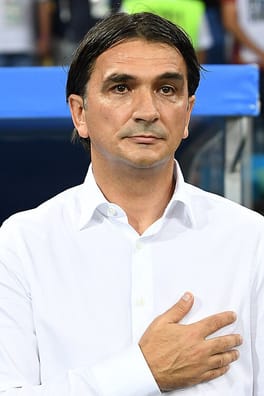
Photo: Анна Нэсси / CC BY-SA 3.0 (source: Wikimedia Commons)
Born on October 26, 1966, Zlatko Dalić is from Livno, Canton 10, Bosnia and Herzegovina. Public records list Zlatko Dalić as an association football player, association football coach and celebrity. The age as of 2026 is 59. The listed height is 179 cm.
My Take
Zlatko Dalic is, in my view, one of the more underrated tournament managers of his era. Taking Croatia to a World Cup final in 2018 and a third-place finish in 2022, with a nation of barely four million people, is a feat I don't think gets enough credit. What I appreciate is the consistency: qualifying for Euro 2020 and Euro 2024 on top of those runs shows it wasn't a fluke. Born in Livno and steeped in the Croatian footballing identity, he seems to coach with a stubborn, never-fold temperament that mirrors his squads. He's been at the helm since 2017, and that stability speaks volumes.
This take was written by generative AI, one per person, from publicly reported facts (editorial policy). It is a reading of the record, not reporting.
1. Profile
- Name (English)
- Zlatko Dalić
- Name (Japanese)
- ズラトコ・ダリッチ
- Reading
- ずらとこ・だりっち
- Born
- October 26, 1966 (age 59)
- Origin
- Livno, Canton 10, Bosnia and Herzegovina
- Height
- 179 cm
- Occupation
- association football player / association football coach / celebrity
- Zodiac / Chinese zodiac
- Scorpio / Horse
2. Links
3. About this entry
Tags
- Last updated
Facts are limited to publicly available information up to 2024; non-public or unconfirmed items are omitted. English text is machine-assisted (facts translated by Sonnet, "My Take" written by Opus 4.8). The Japanese page is the source of record.
Frequently asked questions
When was Zlatko Dalić born?
Born October 26, 1966 (age 59).
Where is Zlatko Dalić from?
Zlatko Dalić is from Livno, Canton 10, Bosnia and Herzegovina.
What does Zlatko Dalić do?
Zlatko Dalić works as association football player, association football coach, celebrity.
How tall is Zlatko Dalić?
Zlatko Dalić is 179 cm.
Association football player — see all → · Association football coach — see all → · More people from Bosnia and Herzegovina →