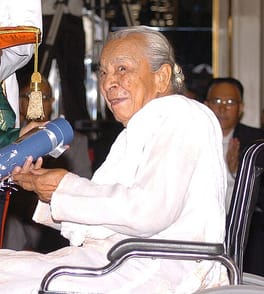
Photo: President's Secretariat / GODL-India (source: Wikimedia Commons)
Zohra Sehgal was listed as a dancer, choreographer and stage actor. Born on April 27, 1912, Zohra Sehgal was from Saharanpur, Saharanpur district, India. Death is recorded on July 10, 2014, at the age of 102. Schooling on record includes Queen Mary College, Lahore. Awards on record include Padma Vibhushan (2010), Padma Bhushan (2002), Padma Shri (1998) and 2 more.
My Take
Zohra Sehgal's career humbles me. Born in 1912 in Saharanpur, she worked for more than eight decades, from contemporary dance to choreography to acting, and kept working well into her nineties. She bridged British cinema and Bollywood, earning India's Padma Vibhushan among other honors. What moves me most is the mischievous warmth she brought to her later roles; longevity alone is impressive, but she kept delighting audiences to the very end. To me she embodies the idea that artistry is not a phase of life but a way of living it, fully and joyfully, right through.
This take was written by generative AI, one per person, from publicly reported facts (editorial policy). It is a reading of the record, not reporting.
1. Profile
- Name (English)
- Zohra Sehgal
- Name (Japanese)
- ゾーラ・セーガル
- Reading
- ぞーら・せーがる
- Born
- April 27, 1912 – July 10, 2014
- Origin
- Saharanpur, Saharanpur district, India
- Occupation
- dancer / choreographer / stage actor / film actor / television actor
- Zodiac / Chinese zodiac
- Taurus / Rat
2. Background
- University
- Queen Mary College, Lahore
Awards & achievements
- 2010 Padma Vibhushan
- 2002 Padma Bhushan
- 1998 Padma Shri
- 1963 Sangeet Natak Akademi Award
- 2004 Sangeet Natak Akademi Fellowship
3. Links
- Wikipedia (English)https://en.wikipedia.org/wiki/Zohra%20Sehgal
- Wikidatahttps://www.wikidata.org/wiki/Q143896
4. About this entry
Tags
- Last updated
Facts are limited to publicly available information up to 2024; non-public or unconfirmed items are omitted. English text is machine-assisted (facts translated by Sonnet, "My Take" written by Opus 4.8). The Japanese page is the source of record.
Frequently asked questions
When was Zohra Sehgal born?
Zohra Sehgal was born on April 27, 1912.
When did Zohra Sehgal die?
Zohra Sehgal died on July 10, 2014, aged 102.
Where was Zohra Sehgal from?
Zohra Sehgal was from Saharanpur, Saharanpur district, India.
What did Zohra Sehgal do?
Zohra Sehgal worked as dancer, choreographer, stage actor, film actor, television actor.
Where did Zohra Sehgal study?
Zohra Sehgal attended Queen Mary College, Lahore.
Dancer — see all → · Choreographer — see all → · More people from India → · More people born on April 27 →