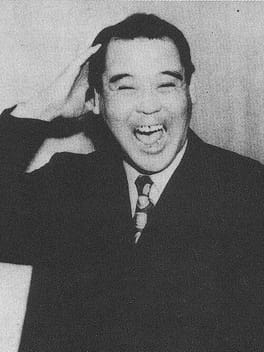
Photo: Unknown author / Public domain (source: Wikimedia Commons)
My Take
Hanabishi Achako is one of those figures where you don't need to have grown up watching him to feel the weight of what he represented. Born in Fukui in 1897 and working from the Taisho era deep into the Showa era, he was a comedian and stage actor from a time before television turned comedy into background noise — when making a room full of strangers burst out laughing meant you had real craft, not just a production team. The kind of timing, physicality, and presence it took to hold an audience with nothing but your voice and your face is genuinely rare, and the fact that he kept people coming back for decades says everything. I find myself oddly grateful for performers like him — the ones who laid the groundwork for what Japanese comedy even became — even when most of the specifics have faded into history.
This take was written by generative AI, one per person, from publicly reported facts (editorial policy). It is a reading of the record, not reporting.
Overview
Achako Hanabishi (July 10, 1897 – July 25, 1974) was a Japanese actor and comedian born in Fukui Prefecture. Active across theater and film, he was celebrated as a leading figure in Japanese comic performance, entertaining audiences through the Taisho and Showa eras, most famously in the manzai duo Yokoyama Entatsu and Hanabishi Achako. He is remembered as one of the foundational talents of Kansai-style comedy.
1. Profile
- Name (English)
- Achako Hanabishi
- Name (Japanese)
- 花菱アチャコ
- Reading
- はなびし あちゃこ
- Born
- July 10, 1897 – July 25, 1974
- Origin
- Fukui Prefecture, Japan
- Occupation
- Actor / Comedy Entertainer / Comedian
- Zodiac / Chinese zodiac
- Cancer / Rooster
- Agency
- Yoshimoto Kogyo
2. Links
3. About this entry
Tags
- Last updated
Only publicly available facts are listed; non-public or unconfirmed items are omitted. Base data was compiled from Wikidata from June 2026 onward; ages are recalculated daily and deaths are checked against Wikidata on an ongoing basis. Works and profile fields sourced from Wikipedia reflect content as of 2026-08-26. English text is machine-assisted (facts translated by Sonnet, "My Take" written by Opus 4.8). The Japanese page is the source of record.
Frequently asked questions
When was Achako Hanabishi born?
Achako Hanabishi was born on July 10, 1897.
When did Achako Hanabishi die?
Achako Hanabishi died on July 25, 1974, aged 77.
Where was Achako Hanabishi from?
Achako Hanabishi was from Fukui Prefecture, Japan.
What did Achako Hanabishi do?
Achako Hanabishi worked as Actor, Comedy Entertainer, Comedian.
What agency was Achako Hanabishi with?
Achako Hanabishi was with Yoshimoto Kogyo.
Actor — see all → · Comedy Entertainer — see all → · More people from Japan → · More people born on July 10 →