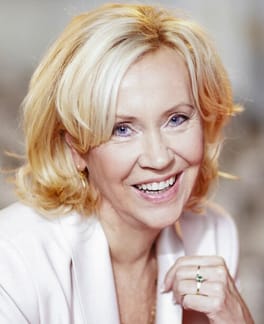
Photo: Stockholm Pride / CC BY 3.0 (source: Wikimedia Commons)
Agnetha Fältskog was born in Jönköping, Jönköping County, Sweden on April 5, 1950. Agnetha Fältskog is listed as a schlager singer, autobiographer and composer. The age as of 2026 is 76. Awards on record include Commander 1st class of the Order of Vasa (2024).
My Take
What strikes me most about Agnetha Faltskog is the dignity of her retreat. She had already proven herself in Sweden with a solo debut at eighteen, long before ABBA made her one of the most recognizable voices on the planet. That crystalline soprano carried songs like a confession, yet when the spotlight grew too heavy she simply stepped away and lived on her own terms. I admire artists who treat fame as a tool rather than an identity, and she is the textbook case. The 2024 Order of Vasa felt less like a comeback than a nation finally saying thank you. Her silence, to me, was always part of the music.
This take was written by generative AI, one per person, from publicly reported facts (editorial policy). It is a reading of the record, not reporting.
1. Profile
- Name (English)
- Agnetha Fältskog
- Name (Japanese)
- アグネッタ・フォルツコグ
- Reading
- あぐねった・ふぉるつこぐ
- Born
- April 5, 1950 (age 76)
- Origin
- Jönköping, Jönköping County, Sweden
- Occupation
- schlager singer / autobiographer / composer / songwriter / recording artist
- Zodiac / Chinese zodiac
- Aries / Tiger
2. Background
Awards & achievements
- 2024 Commander 1st class of the Order of Vasa
3. Links
- Official sitehttp://www.agnetha.com/
- Instagramhttps://www.instagram.com/agnetha_official/
- Xhttps://x.com/AgnethaOfficial
- Wikipedia (English)https://en.wikipedia.org/wiki/Agnetha%20F%C3%A4ltskog
- Wikipedia (Japanese)https://ja.wikipedia.org/wiki/%E3%82%A2%E3%82%B0%E3%83%8D%E3%82%BF%E3%83%BB%E3%83%95%E3%82%A9%E3%83%AB%E3%83%84%E3%82%B3%E3%82%B0
- Wikidatahttps://www.wikidata.org/wiki/Q173144
4. About this entry
Tags
- Last updated
Facts are limited to publicly available information up to 2024; non-public or unconfirmed items are omitted. English text is machine-assisted (facts translated by Sonnet, "My Take" written by Opus 4.8). The Japanese page is the source of record.
Frequently asked questions
When was Agnetha Fältskog born?
Born April 5, 1950 (age 76).
Where is Agnetha Fältskog from?
Agnetha Fältskog is from Jönköping, Jönköping County, Sweden.
What does Agnetha Fältskog do?
Agnetha Fältskog works as schlager singer, autobiographer, composer, songwriter, recording artist.