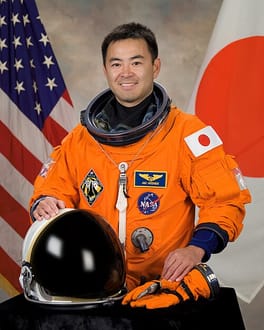
Photo: NASA / Public domain (source: Wikimedia Commons)
My Take
Honestly, every time I think about Akihiko Hoshide I get a little overwhelmed — this guy grew up in Setagaya, just a regular Tokyo neighborhood, went to school, went to university in Houston, and then just... went to space. Multiple times. He flew on the Space Shuttle, spent nearly six months on the ISS during his 2021-2022 mission where he actually served as commander, becoming the first Japanese astronaut to command the station. Commander! There's something quietly extraordinary about a person who spends decades grinding through unglamorous training — simulations, spacewalks, more simulations — without any of the flashy celebrity that comes easy to people a fraction as accomplished.
This take was written by generative AI, one per person, from publicly reported facts (editorial policy). It is a reading of the record, not reporting.
Overview
Akihiko Hoshide is a Japanese astronaut born on December 28, 1968, in Setagaya, Tokyo. He attended Meikeigakuen Junior and Senior High School before earning a degree from the University of Houston. Known for his methodical dedication to one of the most demanding professions in the world, he has represented Japan in human spaceflight programs.
1. Profile
- Name (English)
- Akihiko Hoshide
- Name (Japanese)
- 星出彰彦
- Reading
- ほしで あきひこ
- Born
- December 28, 1968 (age 57)
- Origin
- Setagaya, Tokyo, Japan
- Occupation
- Astronaut
- Zodiac / Chinese zodiac
- Capricorn / Monkey
2. Background
- High school
- Meikeigakuen Junior and Senior High School
- University
- University of Houston
3. Links
4. About this entry
Tags
- Last updated
Facts are limited to publicly available information up to 2024; non-public or unconfirmed items are omitted. English text is machine-assisted (facts translated by Sonnet, "My Take" written by Opus 4.8). The Japanese page is the source of record.
Frequently asked questions
When was Akihiko Hoshide born?
Born December 28, 1968 (age 57).
Where is Akihiko Hoshide from?
Akihiko Hoshide is from Setagaya, Tokyo, Japan.
What does Akihiko Hoshide do?
Akihiko Hoshide works as Astronaut.