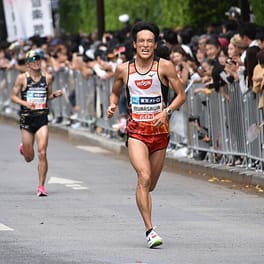
Photo: 江戸村のとくぞう / CC BY-SA 4.0 (source: Wikimedia Commons)
My Take
Akinobu Murasawa is the kind of athlete who makes you feel a little lazy just thinking about him. Born in Nagano in 1991 — the sort of cold, high-altitude prefecture that seems to breed runners with iron legs — he went on to Tokai University and committed seriously to track and field at a level most people never come close to. Long-distance running culture in Japan is genuinely something else: the discipline, the team training camps, the Ekiden relay races that are practically a national religion. Murasawa exists in that world, and there's something quietly impressive about someone who just puts their head down, eats the kilometers, and keeps going without making a spectacle of it. I don't have his race times memorized, but honestly, anyone who dedicates that much of their life to pushing their own physical limits earns some respect from me automatically.
This take was written by generative AI, one per person, from publicly reported facts (editorial policy). It is a reading of the record, not reporting.
Overview
Akinobu Murasawa is a Japanese track and field athlete born on March 28, 1991, in Nagano Prefecture, Japan. He attended Tokai University, where he pursued competitive athletics. Details about his active period, agency, and personal life have not been made public.
1. Profile
- Name (English)
- Akinobu Murasawa
- Name (Japanese)
- 村澤明伸
- Reading
- むらさわ あきのぶ
- Born
- March 28, 1991 (age 35)
- Origin
- Nagano Prefecture, Japan
- Occupation
- Track and field athlete
- Zodiac / Chinese zodiac
- Aries / Goat
2. Background
- University
- Tokai University
3. Links
- Wikipedia (Japanese)https://ja.wikipedia.org/wiki/%E6%9D%91%E6%BE%A4%E6%98%8E%E4%BC%B8
- Wikidatahttps://www.wikidata.org/wiki/Q11523349
4. About this entry
Tags
- Last updated
Facts are limited to publicly available information up to 2024; non-public or unconfirmed items are omitted. English text is machine-assisted (facts translated by Sonnet, "My Take" written by Opus 4.8). The Japanese page is the source of record.
Frequently asked questions
When was Akinobu Murasawa born?
Born March 28, 1991 (age 35).
Where is Akinobu Murasawa from?
Akinobu Murasawa is from Nagano Prefecture, Japan.
What does Akinobu Murasawa do?
Akinobu Murasawa works as Track and field athlete.
Track and field athlete — see all → · More people from Japan →