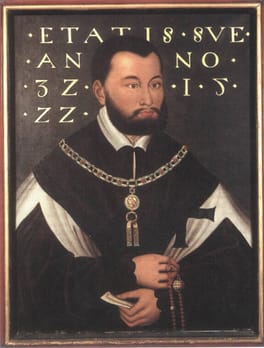
Photo: Hans Krell / Public domain (source: Wikimedia Commons)
Albert, Duke in Prussia was listed as a hymnwriter. Born on May 17, 1490, Albert, Duke in Prussia was from Ansbach, Middle Franconia, Germany. Death is recorded on March 20, 1568, at the age of 77. Credited works include What my God wants, should always happen.
My Take
Albert of Prussia interests me less as a hymnwriter than as a man who reinvented himself completely. He rose to become the last grand master of the Teutonic Knights, then converted to Lutheranism and refounded that very order as the secular Duchy of Prussia, becoming its first ruler. That is an astonishing pivot, dismantling an old world to build a new one. The detail I love is that this soldier-statesman also wrote sacred verse. A man who could command armies and craft prayers feels deeply human to me, and history rarely produces figures who reshape their age so deliberately.
This take was written by generative AI, one per person, from publicly reported facts (editorial policy). It is a reading of the record, not reporting.
1. Profile
- Name (English)
- Albert, Duke in Prussia
- Name (Japanese)
- アルブレヒト
- Reading
- あるぶれひと
- Born
- May 17, 1490 – March 20, 1568
- Origin
- Ansbach, Middle Franconia, Germany
- Occupation
- hymnwriter
- Zodiac / Chinese zodiac
- Taurus / Dog
2. Works & records
Filmography / notable works
| Category | Title |
|---|---|
| Notable work | What my God wants, should always happen |
3. Links
4. About this entry
Tags
- Last updated
Facts are limited to publicly available information up to 2024; non-public or unconfirmed items are omitted. English text is machine-assisted (facts translated by Sonnet, "My Take" written by Opus 4.8). The Japanese page is the source of record.
Frequently asked questions
When was Albert, Duke in Prussia born?
Albert, Duke in Prussia was born on May 17, 1490.
When did Albert, Duke in Prussia die?
Albert, Duke in Prussia died on March 20, 1568, aged 77.
Where was Albert, Duke in Prussia from?
Albert, Duke in Prussia was from Ansbach, Middle Franconia, Germany.
What did Albert, Duke in Prussia do?
Albert, Duke in Prussia worked as hymnwriter.
What was Albert, Duke in Prussia known for?
Albert, Duke in Prussia's notable works include What my God wants, should always happen.