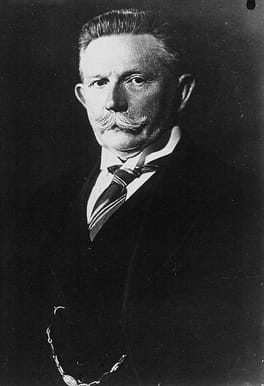
Photo: Robert Sennecke / Public domain (source: Wikimedia Commons)
Alfred Hugenberg was born on June 19, 1865 in Hanover, Lower Saxony, Germany and was credited as a politician, media proprietor and financier. Death is recorded on March 12, 1951, at the age of 85. Alfred Hugenberg studied at University of Göttingen. Awards on record include Adlerschild des Deutschen Reiches (1943).
My Take
Alfred Hugenberg, who died in 1951, is one of those names I find genuinely chilling to read about. He built Germany's dominant media empire of the 1920s, newspapers and film, and wielded public opinion like a lever. The grim part is how he poured that influence into nationalist politics in the dying Weimar years and helped enable the Nazi rise. He's a living lesson in what concentrated media power can do when pointed the wrong way. A Göttingen-educated businessman whose name now carries both wealth and disgrace, he's exactly the historical figure we shouldn't let fade from memory.
This take was written by generative AI, one per person, from publicly reported facts (editorial policy). It is a reading of the record, not reporting.
1. Profile
- Name (English)
- Alfred Hugenberg
- Name (Japanese)
- アルフレート・フーゲンベルク
- Reading
- あるふれーと・ふーげんべるく
- Born
- June 19, 1865 – March 12, 1951
- Origin
- Hanover, Lower Saxony, Germany
- Occupation
- politician / media proprietor / financier / diplomat / publisher
- Zodiac / Chinese zodiac
- Gemini / Ox
2. Background
- University
- University of Göttingen
Awards & achievements
- 1943 Adlerschild des Deutschen Reiches
3. Links
4. About this entry
Tags
- Last updated
Facts are limited to publicly available information up to 2024; non-public or unconfirmed items are omitted. English text is machine-assisted (facts translated by Sonnet, "My Take" written by Opus 4.8). The Japanese page is the source of record.
Frequently asked questions
When was Alfred Hugenberg born?
Born June 19, 1865.
When did Alfred Hugenberg die?
Died March 12, 1951, aged 85.
Where was Alfred Hugenberg from?
Alfred Hugenberg was from Hanover, Lower Saxony, Germany.
What did Alfred Hugenberg do?
Alfred Hugenberg worked as politician, media proprietor, financier, diplomat, publisher.