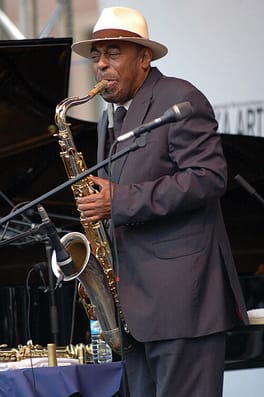
Photo: Kotoviski photographed by Henryk Kotowski / CC BY-SA 3.0 (source: Wikimedia Commons)
Archie Shepp, born on May 24, 1937 in Fort Lauderdale, Florida, United States, is a composer, saxophonist and jazz musician. Archie Shepp is 89 years old as of 2026. Schooling on record includes Germantown High School and Goddard College. Recorded honors include NEA Jazz Masters, Honorary doctor of the University of Liège (2009) and honorary doctor of Paris 8 University (2014).
My Take
Archie Shepp is one of those figures I keep returning to whenever I think about jazz that refuses to sit still. Coming out of Fort Lauderdale and emerging in the 1960s, he helped push the avant-garde forward at a moment when the music was carrying real political weight, and that fusion of fire and intellect is what makes him stand out to me. What I admire most is that he never stayed only a performer; he became an educator and playwright too, the kind of artist who treats jazz as a living argument. The NEA Jazz Masters honor and his honorary doctorates feel earned rather than ceremonial.
This take was written by generative AI, one per person, from publicly reported facts (editorial policy). It is a reading of the record, not reporting.
1. Profile
- Name (English)
- Archie Shepp
- Name (Japanese)
- アーチー・シェップ
- Reading
- あーちー・しぇっぷ
- Born
- May 24, 1937 (age 89)
- Origin
- Fort Lauderdale, Florida, United States
- Occupation
- composer / saxophonist / jazz musician / university teacher / pianist
- Zodiac / Chinese zodiac
- Gemini / Ox
2. Background
- High school
- Germantown High School
- University
- Goddard College
Awards & achievements
- NEA Jazz Masters
- 2009 Honorary doctor of the University of Liège
- 2014 honorary doctor of Paris 8 University
3. Links
- Official sitehttps://www.archieshepp.org/
- Wikipedia (English)https://en.wikipedia.org/wiki/Archie%20Shepp
- Wikipedia (Japanese)https://ja.wikipedia.org/wiki/%E3%82%A2%E3%83%BC%E3%83%81%E3%83%BC%E3%83%BB%E3%82%B7%E3%82%A7%E3%83%83%E3%83%97
- Wikidatahttps://www.wikidata.org/wiki/Q200791
4. About this entry
Tags
- Last updated
Facts are limited to publicly available information up to 2024; non-public or unconfirmed items are omitted. English text is machine-assisted (facts translated by Sonnet, "My Take" written by Opus 4.8). The Japanese page is the source of record.
Frequently asked questions
When was Archie Shepp born?
Born May 24, 1937 (age 89).
Where is Archie Shepp from?
Archie Shepp is from Fort Lauderdale, Florida, United States.
What does Archie Shepp do?
Archie Shepp works as composer, saxophonist, jazz musician, university teacher, pianist.
Composer — see all → · Saxophonist — see all → · More people from the United States →