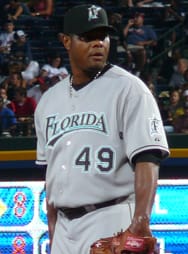
Photo: User Chrisjnelson on en.wikipedia / Public domain (source: Wikimedia Commons)
Armando Benítez is credited as a baseball player. Born on November 3, 1972, Armando Benítez is from Ramón Santana, San Pedro de Macorís, Dominican Republic. That works out to 53 years old in 2026.
My Take
Armando Benítez embodies one of the most thankless jobs in sports: the closer, where a single pitch tips the game toward triumph or disaster. Coming out of San Pedro de Macorís, the legendary baseball cradle of the Dominican Republic, he reached the majors with Baltimore in 1994 and quickly became a power-armed finisher whose fastball overwhelmed hitters. His 289 career saves rank 32nd all time, a number earned by repeatedly walking into the ninth inning with everything on the line. I have real respect for relievers who endure that nightly pressure for over a decade. Benítez stood in the fire longer than most ever could.
This take was written by generative AI, one per person, from publicly reported facts (editorial policy). It is a reading of the record, not reporting.
1. Profile
- Name (English)
- Armando Benítez
- Name (Japanese)
- アーマンド・ベニテス
- Reading
- あーまんど・べにてす
- Born
- November 3, 1972 (age 53)
- Origin
- Ramón Santana, San Pedro de Macorís, Dominican Republic
- Occupation
- baseball player
- Zodiac / Chinese zodiac
- Scorpio / Rat
2. Links
3. About this entry
Tags
- Last updated
Facts are limited to publicly available information up to 2024; non-public or unconfirmed items are omitted. English text is machine-assisted (facts translated by Sonnet, "My Take" written by Opus 4.8). The Japanese page is the source of record.
Frequently asked questions
When was Armando Benítez born?
Born November 3, 1972 (age 53).
Where is Armando Benítez from?
Armando Benítez is from Ramón Santana, San Pedro de Macorís, Dominican Republic.
What does Armando Benítez do?
Armando Benítez works as baseball player.
Baseball player — see all → · More people from the Dominican Republic →