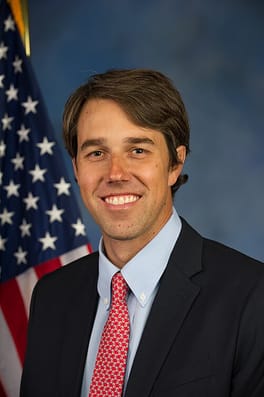
Photo: US Government / Public domain (source: Wikimedia Commons)
Born on September 26, 1972 in El Paso, Texas, United States, Beto O'Rourke is a politician, business executive and musician. That puts Beto O'Rourke at 53 years old in 2026. Education on record includes El Paso High School and Columbia University.
My Take
Beto O'Rourke is one of those American political figures I keep coming back to because he keeps coming back. The El Paso native lit up the 2018 Texas Senate race against Ted Cruz and turned a near-miss into national attention, then carried that momentum into a 2020 presidential bid and a 2022 gubernatorial run. What fascinates me is the breadth of his earlier life, from playing in a band to running businesses, which feels at odds with the polished campaign image. Columbia-educated and relentlessly mobile, he reads to me as a politician defined as much by persistence as by any single victory.
This take was written by generative AI, one per person, from publicly reported facts (editorial policy). It is a reading of the record, not reporting.
1. Profile
- Name (English)
- Beto O'Rourke
- Name (Japanese)
- ベト・オルーク
- Reading
- べと・おるーく
- Born
- September 26, 1972 (age 53)
- Origin
- El Paso, Texas, United States
- Occupation
- politician / business executive / musician / businessperson / writer
- Zodiac / Chinese zodiac
- Libra / Rat
2. Background
- High school
- El Paso High School
- University
- Columbia University
3. Links
- Official sitehttps://betoorourke.com/
- Instagramhttps://www.instagram.com/betoorourke/
- Xhttps://x.com/RepBetoORourke
- Wikipedia (English)https://en.wikipedia.org/wiki/Beto%20O'Rourke
- Wikipedia (Japanese)https://ja.wikipedia.org/wiki/%E3%83%99%E3%83%88%E3%83%BB%E3%82%AA%E3%83%AB%E3%83%BC%E3%82%AF
- Wikidatahttps://www.wikidata.org/wiki/Q4014532
4. About this entry
Tags
- Last updated
Facts are limited to publicly available information up to 2024; non-public or unconfirmed items are omitted. English text is machine-assisted (facts translated by Sonnet, "My Take" written by Opus 4.8). The Japanese page is the source of record.
Frequently asked questions
When was Beto O'Rourke born?
Born September 26, 1972 (age 53).
Where is Beto O'Rourke from?
Beto O'Rourke is from El Paso, Texas, United States.
What does Beto O'Rourke do?
Beto O'Rourke works as politician, business executive, musician, businessperson, writer.
Politician — see all → · Business executive — see all → · More people from the United States →