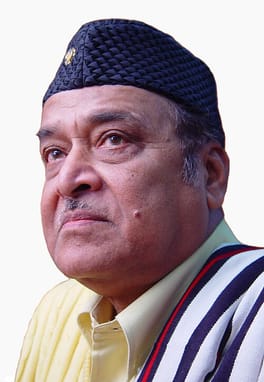
Photo: Utpal Baruah, UB Photos, www.ubphotos.com / CC BY-SA 3.0 (source: Wikimedia Commons)
Bhupen Hazarika was an actor, film director and singer, born on September 8, 1926 in Assam, India. Bhupen Hazarika died on November 5, 2011 at the age of 85. Education on record includes Cotton University. Listed accolades include Sangeet Natak Akademi Award, Dadasaheb Phalke Award, Padma Bhushan and 4 more.
My Take
Bhupen Hazarika fascinates me because he refused to be just one thing. Singer, songwriter, filmmaker, writer, politician, all rolled into one Assamese voice that carried humanity and brotherhood across borders. I love that he wrote chiefly in Assamese, a regional language, yet his songs traveled into Bengali and Hindi and beyond. That is the rare artist who lifts a local culture onto a national, even universal stage rather than abandoning it for a bigger audience. The nickname Sudha Kantha, the nectar-voiced one, says it all. To me he is proof that rootedness and reach are not opposites but partners.
This take was written by generative AI, one per person, from publicly reported facts (editorial policy). It is a reading of the record, not reporting.
1. Profile
- Name (English)
- Bhupen Hazarika
- Name (Japanese)
- ブーペン・ハザリカ
- Reading
- ぶーぺん・はざりか
- Born
- September 8, 1926 – November 5, 2011
- Origin
- Assam, India
- Occupation
- actor / film director / singer / composer / writer
- Zodiac / Chinese zodiac
- Virgo / Tiger
2. Background
- University
- Cotton University
Awards & achievements
- Sangeet Natak Akademi Award
- Dadasaheb Phalke Award
- Padma Bhushan
- National Film Award for Best Music Direction
- Padma Shri in arts
- Padma Vibhushan
- Fellow of the Sangeet Natak Akademi
3. Links
- Official sitehttps://www.bhupenhazarika.com/
- Wikipedia (English)https://en.wikipedia.org/wiki/Bhupen%20Hazarika
- Wikipedia (Japanese)https://ja.wikipedia.org/wiki/%E3%83%96%E3%83%BC%E3%83%9A%E3%83%B3%E3%83%BB%E3%83%8F%E3%82%B6%E3%83%AA%E3%82%AB
- Wikidatahttps://www.wikidata.org/wiki/Q855128
4. About this entry
Tags
- Last updated
Facts are limited to publicly available information up to 2024; non-public or unconfirmed items are omitted. English text is machine-assisted (facts translated by Sonnet, "My Take" written by Opus 4.8). The Japanese page is the source of record.
Frequently asked questions
When was Bhupen Hazarika born?
Born September 8, 1926.
When did Bhupen Hazarika die?
Died November 5, 2011, aged 85.
Where was Bhupen Hazarika from?
Bhupen Hazarika was from Assam, India.
What did Bhupen Hazarika do?
Bhupen Hazarika worked as actor, film director, singer, composer, writer.
Actor — see all → · Film director — see all → · More people from India →