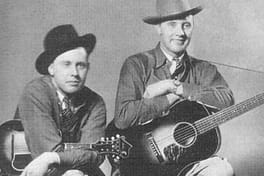
Photo: Norran Lamberson. Waylon at de.wikipedia / Public domain (source: Wikimedia Commons)
Bill Monroe was born on September 13, 1911 in Rosine, Kentucky, United States and was credited as a singer, singer-songwriter and composer. Bill Monroe died on September 9, 1996 at the age of 84. Awards on record include Peabody Awards, National Medal of Arts, Grammy Lifetime Achievement Award (1993) and 1 more.
My Take
Calling Bill Monroe the "Father of Bluegrass" sounds like marketing until you realize he literally invented the genre, name and all, through his band the Blue Grass Boys. That's a rare thing, an entire musical tradition traceable to one person from rural Kentucky. What I respect most is the longevity and the hardware: a Grammy Lifetime Achievement Award, the National Medal of Arts, and induction into the Rock and Roll Hall of Fame in 1997, the year after he died. His high lonesome singing and breakneck mandolin set a template thousands have chased since. Few musicians can claim they didn't just master a style; they created one.
This take was written by generative AI, one per person, from publicly reported facts (editorial policy). It is a reading of the record, not reporting.
1. Profile
- Name (English)
- Bill Monroe
- Name (Japanese)
- ビル・モンロー
- Reading
- びる・もんろー
- Born
- September 13, 1911 – September 9, 1996
- Origin
- Rosine, Kentucky, United States
- Occupation
- singer / singer-songwriter / composer / mandolinist / guitarist
- Zodiac / Chinese zodiac
- Virgo / Boar
2. Background
Awards & achievements
- Peabody Awards
- National Medal of Arts
- 1993 Grammy Lifetime Achievement Award
- 1997 Rock and Roll Hall of Fame
3. Links
- Wikipedia (English)https://en.wikipedia.org/wiki/Bill%20Monroe
- Wikipedia (Japanese)https://ja.wikipedia.org/wiki/%E3%83%93%E3%83%AB%E3%83%BB%E3%83%A2%E3%83%B3%E3%83%AD%E3%83%BC
- Wikidatahttps://www.wikidata.org/wiki/Q170042
4. About this entry
Tags
- Last updated
Facts are limited to publicly available information up to 2024; non-public or unconfirmed items are omitted. English text is machine-assisted (facts translated by Sonnet, "My Take" written by Opus 4.8). The Japanese page is the source of record.
Frequently asked questions
When was Bill Monroe born?
Born September 13, 1911.
When did Bill Monroe die?
Died September 9, 1996, aged 84.
Where was Bill Monroe from?
Bill Monroe was from Rosine, Kentucky, United States.
What did Bill Monroe do?
Bill Monroe worked as singer, singer-songwriter, composer, mandolinist, guitarist.
Singer — see all → · Singer-songwriter — see all → · More people from the United States →