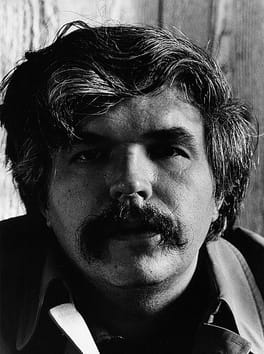
Photo: Photograph by Friedl Kubelka. Though the photo was not attributed in the Filmex '76 program, it was later used on the cover of Kubelka's 2006 book Portraits of American Independent Filmmakers 1974–1981, confirming its authorship. / Public domain (source: Wikimedia Commons)
Born on January 14, 1933 in Kansas City, Missouri, United States, Stan Brakhage was a cinematographer, film editor and film director. Death is recorded on March 9, 2003, at the age of 70. Education on record includes South High School and Dartmouth College. Listed accolades include Guggenheim Fellowship and Maya Deren Award (1986). Notable works include Dog Star Man.
My Take
Stan Brakhage is a name I bring up whenever someone claims film has to tell a story. One of the towering figures of twentieth-century experimental cinema, he painted directly onto celluloid, shot frantic handheld footage, and treated light itself as his subject. Dog Star Man remains a touchstone, and his five-decade output reflects a stubborn, almost monastic devotion to the medium. The Guggenheim Fellowship and Maya Deren Award show the establishment eventually caught up to him. His work isn't for everyone, and that's precisely why I admire it; he made art for the eye rather than the box office, and that integrity endures.
This take was written by generative AI, one per person, from publicly reported facts (editorial policy). It is a reading of the record, not reporting.
1. Profile
- Name (English)
- Stan Brakhage
- Name (Japanese)
- スタン・ブラッケージ
- Reading
- すたん・ぶらっけーじ
- Born
- January 14, 1933 – March 9, 2003
- Origin
- Kansas City, Missouri, United States
- Occupation
- cinematographer / film editor / film director / actor / university teacher
- Zodiac / Chinese zodiac
- Capricorn / Rooster
2. Background
- High school
- South High School
- University
- Dartmouth College
Awards & achievements
- Guggenheim Fellowship
- 1986 Maya Deren Award
3. Works & records
Filmography / notable works
| Category | Title |
|---|---|
| Notable work | Dog Star Man |
4. Links
5. About this entry
Tags
- Last updated
Facts are limited to publicly available information up to 2024; non-public or unconfirmed items are omitted. English text is machine-assisted (facts translated by Sonnet, "My Take" written by Opus 4.8). The Japanese page is the source of record.
Frequently asked questions
When was Stan Brakhage born?
Born January 14, 1933.
When did Stan Brakhage die?
Died March 9, 2003, aged 70.
Where was Stan Brakhage from?
Stan Brakhage was from Kansas City, Missouri, United States.
What did Stan Brakhage do?
Stan Brakhage worked as cinematographer, film editor, film director, actor, university teacher.
What was Stan Brakhage known for?
Notable works include Dog Star Man.
Cinematographer — see all → · Film editor — see all → · More people from the United States →