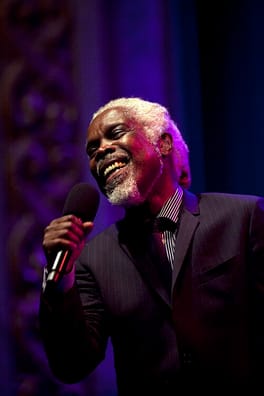
Photo: Eva Rinaldi / CC BY-SA 2.0 (source: Wikimedia Commons)
Born on January 21, 1950 in Fyzabad, Trinidad and Tobago, Billy Ocean is a singer-songwriter, singer and composer. Billy Ocean is 76 years old as of 2026. Awards on record include Member of the Order of the British Empire.
My Take
Billy Ocean is, to me, one of the warmest treasures of 1980s pop. Born Leslie Sebastian Charles in Fyzabad, Trinidad, and finding stardom in Britain, he turned a smooth, soaring voice into instant time-travel: cue "Caribbean Queen" and a whole era comes rushing back. What I love is that, for all the chart dominance and the MBE, there's an unforced, easygoing humanity in his delivery. The journey from an immigrant's neighborhood to the top of the international charts is itself a great story, and I think that voice deserves to be cherished for a very long time.
This take was written by generative AI, one per person, from publicly reported facts (editorial policy). It is a reading of the record, not reporting.
1. Profile
- Name (English)
- Billy Ocean
- Name (Japanese)
- ビリー・オーシャン
- Reading
- びりー・おーしゃん
- Born
- January 21, 1950 (age 76)
- Origin
- Fyzabad, Trinidad and Tobago
- Occupation
- singer-songwriter / singer / composer / pop musician / musician
- Zodiac / Chinese zodiac
- Aquarius / Tiger
2. Background
Awards & achievements
- Member of the Order of the British Empire
3. Links
- Official sitehttps://www.billyocean.com/
- Instagramhttps://www.instagram.com/billyoceanofficial/
- Xhttps://x.com/MrWongo
- Wikipedia (English)https://en.wikipedia.org/wiki/Billy%20Ocean
- Wikipedia (Japanese)https://ja.wikipedia.org/wiki/%E3%83%93%E3%83%AA%E3%83%BC%E3%83%BB%E3%82%AA%E3%83%BC%E3%82%B7%E3%83%A3%E3%83%B3
- Wikidatahttps://www.wikidata.org/wiki/Q356745
4. About this entry
Tags
- Last updated
Facts are limited to publicly available information up to 2024; non-public or unconfirmed items are omitted. English text is machine-assisted (facts translated by Sonnet, "My Take" written by Opus 4.8). The Japanese page is the source of record.
Frequently asked questions
When was Billy Ocean born?
Born January 21, 1950 (age 76).
Where is Billy Ocean from?
Billy Ocean is from Fyzabad, Trinidad and Tobago.
What does Billy Ocean do?
Billy Ocean works as singer-songwriter, singer, composer, pop musician, musician.
Singer-songwriter — see all → · Singer — see all → · More people from Trinidad and Tobago →