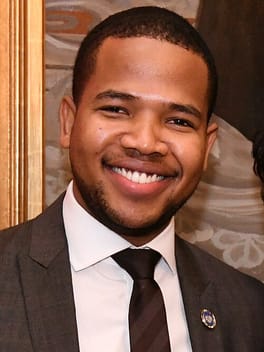
Photo: Maryland GovPics / CC BY 2.0 (source: Wikimedia Commons)
Gabriel Acevero was born on October 23, 1990 in San Fernando, Trinidad and Tobago and is credited as a politician. Gabriel Acevero is 35 years old as of 2026. Schooling on record includes University of Maryland, Baltimore County.
My Take
What grabs me about Gabriel Acevero is the sheer audacity of his arc: a kid born in San Fernando, Trinidad, who turns up in Maryland and wins a House seat outright at 31, finishing first with 31% of the vote. He didn't just win, he made history as the first openly gay Afro-Latino elected to that body, and he refused to soften his politics, proudly carrying the Democratic Socialists banner. I admire politicians who treat their identity as an asset rather than a liability to manage. He's young, unapologetic, and clearly running on conviction. I'll be watching where his career goes from here.
This take was written by generative AI, one per person, from publicly reported facts (editorial policy). It is a reading of the record, not reporting.
1. Profile
- Name (English)
- Gabriel Acevero
- Name (Japanese)
- ガブリエル・アセヴェロ
- Reading
- がぶりえる・あせゔぇろ
- Born
- October 23, 1990 (age 35)
- Origin
- San Fernando, Trinidad and Tobago
- Occupation
- politician
- Zodiac / Chinese zodiac
- Libra / Horse
2. Background
- University
- University of Maryland, Baltimore County
3. Links
4. About this entry
Tags
- Last updated
Facts are limited to publicly available information up to 2024; non-public or unconfirmed items are omitted. English text is machine-assisted (facts translated by Sonnet, "My Take" written by Opus 4.8). The Japanese page is the source of record.
Frequently asked questions
When was Gabriel Acevero born?
Born October 23, 1990 (age 35).
Where is Gabriel Acevero from?
Gabriel Acevero is from San Fernando, Trinidad and Tobago.
What does Gabriel Acevero do?
Gabriel Acevero works as politician.
Politician — see all → · More people from Trinidad and Tobago →