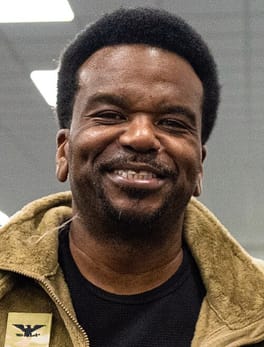
Photo: U.S. Marine Corps photo by Spc. Bryson Walker / Public domain (source: Wikimedia Commons)
Craig Robinson is a television actor, film actor and voice actor. Born on October 25, 1971, Craig Robinson is from Chicago, Illinois, United States. That works out to 54 years old in 2026. Schooling on record includes Whitney M. Young Magnet High School and Illinois State University.
My Take
For me, Craig Robinson is comfort television embodied. As Darryl Philbin on The Office, he had a slow-burn deadpan that let him steal scenes simply by reacting, never straining for the laugh. What I find underrated is how much craft sits behind that ease: five Screen Actors Guild nominations, an Independent Spirit nod, and a Daytime Emmy nomination are not what you collect by accident. He's also a trained musician, which explains the unhurried, rhythmic timing in his delivery. A Chicago kid out of Illinois State, he reminds me that the funniest performers are often the most patient ones.
This take was written by generative AI, one per person, from publicly reported facts (editorial policy). It is a reading of the record, not reporting.
1. Profile
- Name (English)
- Craig Robinson
- Name (Japanese)
- クレイグ・ロビンソン
- Reading
- くれいぐ・ろびんそん
- Born
- October 25, 1971 (age 54)
- Origin
- Chicago, Illinois, United States
- Occupation
- television actor / film actor / actor / voice actor / comedian
- Zodiac / Chinese zodiac
- Scorpio / Boar
2. Background
- High school
- Whitney M. Young Magnet High School
- University
- Illinois State University
3. Links
- Official sitehttps://www.mrcraigrobinson.com
- Instagramhttps://www.instagram.com/mrcraigrobinson/
- Xhttps://x.com/MrCraigRobinson
- Wikipedia (English)https://en.wikipedia.org/wiki/Craig%20Robinson%20(actor)
- Wikipedia (Japanese)https://ja.wikipedia.org/wiki/%E3%82%AF%E3%83%AC%E3%82%A4%E3%82%B0%E3%83%BB%E3%83%AD%E3%83%93%E3%83%B3%E3%82%BD%E3%83%B3
- Wikidatahttps://www.wikidata.org/wiki/Q926912
4. About this entry
Tags
- Last updated
Facts are limited to publicly available information up to 2024; non-public or unconfirmed items are omitted. English text is machine-assisted (facts translated by Sonnet, "My Take" written by Opus 4.8). The Japanese page is the source of record.
Frequently asked questions
When was Craig Robinson born?
Born October 25, 1971 (age 54).
Where is Craig Robinson from?
Craig Robinson is from Chicago, Illinois, United States.
What does Craig Robinson do?
Craig Robinson works as television actor, film actor, actor, voice actor, comedian.
Television actor — see all → · Film actor — see all → · More people from the United States →