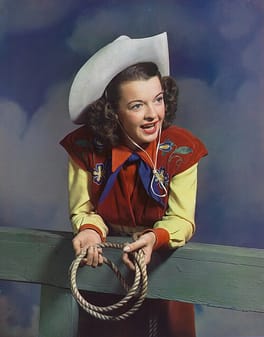
Photo: Harry Warnecke / CC0 (source: Wikimedia Commons)
Born on October 31, 1912, Dale Evans was from Uvalde, Texas, United States. Dale Evans was listed as a singer, songwriter and film actor. Death is recorded on February 7, 2001, at the age of 88. Listed accolades include National Cowgirl Museum and Hall of Fame and star on Hollywood Walk of Fame.
My Take
Dale Evans belongs to an America that feels almost mythic now, all open ranges and singing cowboys. Born in Uvalde, Texas in 1912, she became the radiant counterpart to Roy Rogers on screen, but reducing her to a leading man's wife sells her badly short. She wrote songs, authored books, and earned her place in the National Cowgirl Hall of Fame on her own terms. What I respect is that her warmth never read as mere decoration; there was real spine behind the smile. She died in 2001, but the sunny, hard-working spirit she embodied still deserves remembering and genuine admiration.
This take was written by generative AI, one per person, from publicly reported facts (editorial policy). It is a reading of the record, not reporting.
1. Profile
- Name (English)
- Dale Evans
- Name (Japanese)
- デイル・エヴァンス
- Reading
- でいる・えゔぁんす
- Born
- October 31, 1912 – February 7, 2001
- Origin
- Uvalde, Texas, United States
- Occupation
- singer / songwriter / film actor / actor / writer
- Zodiac / Chinese zodiac
- Scorpio / Rat
2. Background
Awards & achievements
- National Cowgirl Museum and Hall of Fame
- star on Hollywood Walk of Fame
3. Links
- Wikipedia (English)https://en.wikipedia.org/wiki/Dale%20Evans
- Wikidatahttps://www.wikidata.org/wiki/Q438048
4. About this entry
Tags
- Last updated
Facts are limited to publicly available information up to 2024; non-public or unconfirmed items are omitted. English text is machine-assisted (facts translated by Sonnet, "My Take" written by Opus 4.8). The Japanese page is the source of record.
Frequently asked questions
When was Dale Evans born?
Dale Evans was born on October 31, 1912.
When did Dale Evans die?
Dale Evans died on February 7, 2001, aged 88.
Where was Dale Evans from?
Dale Evans was from Uvalde, Texas, United States.
What did Dale Evans do?
Dale Evans worked as singer, songwriter, film actor, actor, writer.
Singer — see all → · Songwriter — see all → · More people from the United States → · More people born on October 31 →