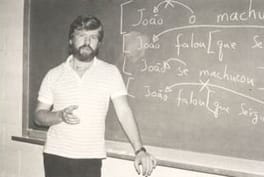
Photo: Xiabikabikabi (talk) / CC BY-SA 3.0 (source: Wikimedia Commons)
Public records list Daniel Everett as a linguist, university teacher and writer. Daniel Everett was born on July 26, 1951 in Holtville, California, United States. That works out to 75 years old in 2026. Schooling on record includes University of Campinas.
My Take
Daniel Everett is a fascinating figure to me because his story crosses so many worlds. He went into the Amazon as a missionary to study the Pirahã people, and ended up having his own faith and some core ideas about language overturned by what he found. His claims about Pirahã grammar sparked one of the biggest debates in modern linguistics, putting him at odds with Chomskyan theory. Whether or not you agree with him, I admire that he let decades of fieldwork actually change his mind. He's now a cognitive sciences professor, and I find that arc, missionary to skeptic to scholar, genuinely compelling.
This take was written by generative AI, one per person, from publicly reported facts (editorial policy). It is a reading of the record, not reporting.
1. Profile
- Name (English)
- Daniel Everett
- Name (Japanese)
- ダニエル・エヴェレット
- Reading
- だにえる・えゔぇれっと
- Born
- July 26, 1951 (age 75)
- Origin
- Holtville, California, United States
- Occupation
- linguist / university teacher / writer / missionary / anthropologist
- Zodiac / Chinese zodiac
- Leo / Rabbit
2. Background
- University
- University of Campinas
3. Links
- Official sitehttps://daneverettbooks.com/
- Xhttps://x.com/amazonrambler
- Wikipedia (English)https://en.wikipedia.org/wiki/Daniel%20Everett
- Wikipedia (Japanese)https://ja.wikipedia.org/wiki/%E3%83%80%E3%83%8B%E3%82%A8%E3%83%AB%E3%83%BB%E3%82%A8%E3%83%B4%E3%82%A7%E3%83%AC%E3%83%83%E3%83%88
- Wikidatahttps://www.wikidata.org/wiki/Q666678
4. About this entry
Tags
- Last updated
Facts are limited to publicly available information up to 2024; non-public or unconfirmed items are omitted. English text is machine-assisted (facts translated by Sonnet, "My Take" written by Opus 4.8). The Japanese page is the source of record.
Frequently asked questions
When was Daniel Everett born?
Born July 26, 1951 (age 75).
Where is Daniel Everett from?
Daniel Everett is from Holtville, California, United States.
What does Daniel Everett do?
Daniel Everett works as linguist, university teacher, writer, missionary, anthropologist.
Linguist — see all → · University teacher — see all → · More people from the United States →