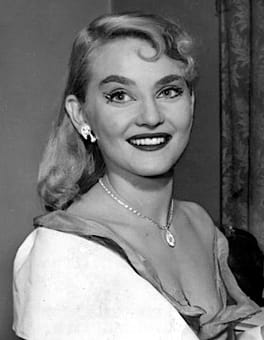
Photo: Unknown author / Public domain (source: Wikimedia Commons)
Diane Cilento was born in Brisbane, Queensland, Australia on April 2, 1932. Diane Cilento was credited as a writer, stage actor and film actor. Death is recorded on October 6, 2011, at the age of 79. Awards on record include Centenary Medal (2001) and Theatre World Award (1956).
My Take
Diane Cilento strikes me as an actress whose intelligence outpaced her era. Coming from Brisbane to conquer London's stages in the 1950s took real nerve, and her Oscar nomination for Tom Jones proved the gamble right. What I admire most is her range: a Tony-nominated Helen of Troy, the unsettling brilliance of The Wicker Man, and later a genuine second career as a writer. She refused to be merely a glamorous face in an industry that demanded exactly that. Australians of her generation often had to leave home to be taken seriously, and she did it entirely on her own terms. I find her quietly inspiring.
This take was written by generative AI, one per person, from publicly reported facts (editorial policy). It is a reading of the record, not reporting.
1. Profile
- Name (English)
- Diane Cilento
- Name (Japanese)
- ダイアン・シレント
- Reading
- だいあん・しれんと
- Born
- April 2, 1932 – October 6, 2011
- Origin
- Brisbane, Queensland, Australia
- Occupation
- actor / writer / stage actor / film actor
- Zodiac / Chinese zodiac
- Aries / Monkey
2. Background
Awards & achievements
- 2001 Centenary Medal
- 1956 Theatre World Award
3. Links
- Wikipedia (English)https://en.wikipedia.org/wiki/Diane%20Cilento
- Wikidatahttps://www.wikidata.org/wiki/Q238871
4. About this entry
Tags
- Last updated
Facts are limited to publicly available information up to 2024; non-public or unconfirmed items are omitted. English text is machine-assisted (facts translated by Sonnet, "My Take" written by Opus 4.8). The Japanese page is the source of record.
Frequently asked questions
When was Diane Cilento born?
Born April 2, 1932.
When did Diane Cilento die?
Died October 6, 2011, aged 79.
Where was Diane Cilento from?
Diane Cilento was from Brisbane, Queensland, Australia.
What did Diane Cilento do?
Diane Cilento worked as actor, writer, stage actor, film actor.
Actor — see all → · Writer — see all → · More people from Australia →