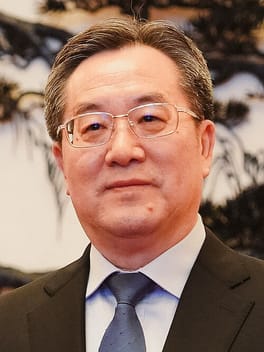
Photo: Foreign, Commonwealth & Development Office / CC BY 2.0 (source: Wikimedia Commons)
Ding Xuexiang is listed as a politician. Ding Xuexiang was born on September 13, 1962 in Nantong, People's Republic of China. That works out to 64 years old in 2026. Education on record includes Fudan University.
My Take
Ding Xuexiang is the kind of political figure who operates in the shadows of power and seems to prefer it that way — which, honestly, is part of what makes him fascinating. Born in Nantong in 1962 and educated at Fudan University, he rose through the ranks not by being flashy but by being indispensable. He served as Xi Jinping's chief of staff in Shanghai and then followed him straight to Beijing, which tells you everything about the trust Xi places in him. By 2023 he had climbed to first-ranked Vice Premier and sixth on the Politburo Standing Committee — one of the seven most powerful people in China. No speeches that go viral, no bold personal brand, just meticulous, quiet influence at the very center of the world's most populous country. If that's not a remarkable career, I don't know what is.
This take was written by generative AI, one per person, from publicly reported facts (editorial policy). It is a reading of the record, not reporting.
1. Profile
- Name (English)
- Ding Xuexiang
- Name (Japanese)
- 丁薛祥
- Reading
- てい・せつしょう
- Born
- September 13, 1962 (age 64)
- Origin
- Nantong, People's Republic of China
- Occupation
- politician
- Zodiac / Chinese zodiac
- Virgo / Tiger
2. Background
- University
- Fudan University
3. Links
- Wikipedia (English)https://en.wikipedia.org/wiki/Ding%20Xuexiang
- Wikipedia (Japanese)https://ja.wikipedia.org/wiki/%E4%B8%81%E8%96%9B%E7%A5%A5
- Wikidatahttps://www.wikidata.org/wiki/Q8292421
4. About this entry
Tags
- Last updated
Only publicly available facts are listed; non-public or unconfirmed items are omitted. Base data was compiled from Wikidata from June 2026 onward; ages are recalculated daily and deaths are checked against Wikidata on an ongoing basis. English text is machine-assisted (facts translated by Sonnet, "My Take" written by Opus 4.8). The Japanese page is the source of record.
Frequently asked questions
When was Ding Xuexiang born?
Ding Xuexiang was born on September 13, 1962 and is 64 years old.
Where is Ding Xuexiang from?
Ding Xuexiang is from Nantong, People's Republic of China.
What does Ding Xuexiang do?
Ding Xuexiang works as politician.
Where did Ding Xuexiang study?
Ding Xuexiang attended Fudan University.
Politician — see all → · More people from the People's Republic of China → · More people born on September 13 →