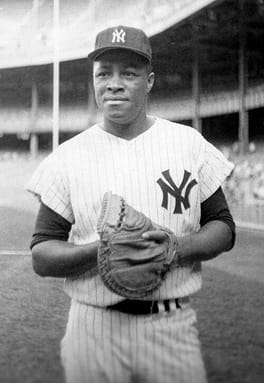
Photo: Arnie Lee / CC BY 3.0 (source: Wikimedia Commons)
Born on February 23, 1929 in St. Louis, Missouri, United States, Elston Howard was a baseball player. Death is recorded on December 14, 1980, at the age of 51. Elston Howard was educated at Vashon High School. Listed accolades include Rawlings Gold Glove Award and Major League Baseball Most Valuable Player Award (1963).
My Take
Elston Howard commands my respect the moment I read his story. He crossed from the Negro leagues to become the first Black player for the New York Yankees, and in 1963 he was named American League MVP, a catcher carrying a storied franchise. Twelve All-Star selections and a Gold Glove confirm the talent, but it is the context that moves me: he answered a wall of prejudice with sheer results. I have always favored the unglamorous craft of catching over the home-run spotlight, and Howard is exactly the kind of quiet master I want remembered.
This take was written by generative AI, one per person, from publicly reported facts (editorial policy). It is a reading of the record, not reporting.
1. Profile
- Name (English)
- Elston Howard
- Name (Japanese)
- エルストン・ハワード
- Reading
- えるすとん・はわーど
- Born
- February 23, 1929 – December 14, 1980
- Origin
- St. Louis, Missouri, United States
- Occupation
- baseball player
- Zodiac / Chinese zodiac
- Pisces / Snake
2. Background
- High school
- Vashon High School
Awards & achievements
- Rawlings Gold Glove Award
- 1963 Major League Baseball Most Valuable Player Award
3. Links
4. About this entry
Tags
- Last updated
Facts are limited to publicly available information up to 2024; non-public or unconfirmed items are omitted. English text is machine-assisted (facts translated by Sonnet, "My Take" written by Opus 4.8). The Japanese page is the source of record.
Frequently asked questions
When was Elston Howard born?
Elston Howard was born on February 23, 1929.
When did Elston Howard die?
Elston Howard died on December 14, 1980, aged 51.
Where was Elston Howard from?
Elston Howard was from St. Louis, Missouri, United States.
What did Elston Howard do?
Elston Howard worked as baseball player.
Which high school did Elston Howard attend?
Elston Howard attended Vashon High School.
Baseball player — see all → · More people from the United States → · More people born on February 23 →