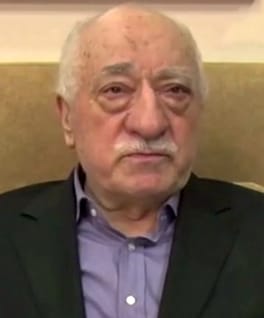
Photo: VOA / Public domain (source: Wikimedia Commons)
Fethullah Gülen was born on April 27, 1941 in Pasinler district, Erzurum Province, Turkey and was credited as a social activist, writer and preacher. Fethullah Gülen died on October 20, 2024, aged 83. Credited works include The Essentials of the Islamic Faith.
My Take
Fethullah Gulen is the most consequential and controversial figure in this batch by a wide margin. A Turkish preacher and scholar who built a global movement spanning millions of followers and thousands of schools, he is impossible to discuss neutrally given his central role in Turkey's political fractures. I am careful here, because his legacy splits sharply depending on who you ask, from inspirational educator to accused conspirator. What I can say plainly is the scale: a network across more than 150 countries is extraordinary reach for one man. He died in 2024, but the arguments over what he built are nowhere near settled.
This take was written by generative AI, one per person, from publicly reported facts (editorial policy). It is a reading of the record, not reporting.
1. Profile
- Name (English)
- Fethullah Gülen
- Name (Japanese)
- フェトフッラー・ギュレン
- Reading
- ふぇとふっらー・ぎゅれん
- Born
- April 27, 1941 – October 20, 2024
- Origin
- Pasinler district, Erzurum Province, Turkey
- Occupation
- social activist / writer / preacher / intellectual / opinion journalist
- Zodiac / Chinese zodiac
- Taurus / Snake
2. Works & records
Filmography / notable works
| Category | Title |
|---|---|
| Notable work | The Essentials of the Islamic Faith |
3. Links
- Official sitehttps://fgulen.com/
- Xhttps://x.com/FGulencomTR
- Wikipedia (English)https://en.wikipedia.org/wiki/Fethullah%20G%C3%BClen
- Wikipedia (Japanese)https://ja.wikipedia.org/wiki/%E3%83%95%E3%82%A7%E3%83%88%E3%83%95%E3%83%83%E3%83%A9%E3%83%BC%E3%83%BB%E3%82%AE%E3%83%A5%E3%83%AC%E3%83%B3
- Wikidatahttps://www.wikidata.org/wiki/Q488200
4. About this entry
Tags
- Last updated
Facts are limited to publicly available information up to 2024; non-public or unconfirmed items are omitted. English text is machine-assisted (facts translated by Sonnet, "My Take" written by Opus 4.8). The Japanese page is the source of record.
Frequently asked questions
When was Fethullah Gülen born?
Born April 27, 1941.
When did Fethullah Gülen die?
Died October 20, 2024, aged 83.
Where was Fethullah Gülen from?
Fethullah Gülen was from Pasinler district, Erzurum Province, Turkey.
What did Fethullah Gülen do?
Fethullah Gülen worked as social activist, writer, preacher, intellectual, opinion journalist.
What was Fethullah Gülen known for?
Notable works include The Essentials of the Islamic Faith.