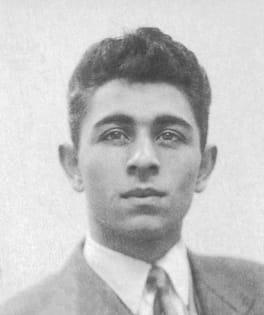
Photo: Inconnu / Public domain (source: Wikimedia Commons)
Francis Lai was listed as a pianist, film score composer and accordionist. Born on April 26, 1932, Francis Lai was from Nice, Alpes-Maritimes, France. Death is recorded on November 7, 2018, at the age of 86. Recorded honors include Academy Award for Best Original Score (1971) and Academy Awards.
My Take
Francis Lai was one of those composers whose melodies could reduce a packed cinema to tears before the characters even said a word — and "Where Do I Begin" from Love Story is proof of that. Born in Nice and shaped by the street accordion sounds of the French Riviera, he had an almost unfair gift for romantic melody, and his collaboration with director Claude Lelouch on A Man and a Woman put him on the world map in 1966. Winning the Academy Award for Best Original Score in 1971 was well deserved, though honestly, the real award is that his themes still feel emotionally honest rather than manipulative — a distinction most film composers never manage. He passed away in November 2018, but his music genuinely lingers. Few people have made love sound that bittersweet and still worth it.
This take was written by generative AI, one per person, from publicly reported facts (editorial policy). It is a reading of the record, not reporting.
1. Profile
- Name (English)
- Francis Lai
- Name (Japanese)
- フランシス・レイ
- Reading
- ふらんしす・れい
- Born
- April 26, 1932 – November 7, 2018
- Origin
- Nice, Alpes-Maritimes, France
- Occupation
- composer / pianist / film score composer / accordionist / singer
- Zodiac / Chinese zodiac
- Taurus / Monkey
2. Background
Awards & achievements
- 1971 Academy Award for Best Original Score
- Academy Awards
3. Links
- Official sitehttps://francislai.com/
- Instagramhttps://www.instagram.com/francislaiofficial/
- Wikipedia (English)https://en.wikipedia.org/wiki/Francis%20Lai
- Wikipedia (Japanese)https://ja.wikipedia.org/wiki/%E3%83%95%E3%83%A9%E3%83%B3%E3%82%B7%E3%82%B9%E3%83%BB%E3%83%AC%E3%82%A4
- Wikidatahttps://www.wikidata.org/wiki/Q223408
4. About this entry
Tags
- Last updated
Only publicly available facts are listed; non-public or unconfirmed items are omitted. Base data was compiled from Wikidata from June 2026 onward; ages are recalculated daily and deaths are checked against Wikidata on an ongoing basis. English text is machine-assisted (facts translated by Sonnet, "My Take" written by Opus 4.8). The Japanese page is the source of record.
Frequently asked questions
When was Francis Lai born?
Francis Lai was born on April 26, 1932.
When did Francis Lai die?
Francis Lai died on November 7, 2018, aged 86.
Where was Francis Lai from?
Francis Lai was from Nice, Alpes-Maritimes, France.
What did Francis Lai do?
Francis Lai worked as composer, pianist, film score composer, accordionist, singer.
Composer — see all → · Pianist — see all → · More people from France → · More people born on April 26 →