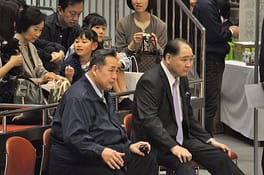
Photo: 江戸村のとくぞう / CC BY-SA 4.0 (source: Wikimedia Commons)
My Take
I'll be honest, what gets me about Kotokaze isn't flash, because there wasn't much of it. This was a Mie-born sumo guy from the late-1950s generation who climbed all the way to ozeki on basically one thing: a relentless, head-down forward push. No fancy throws, no slippery technique, just a big honest man walking you out of the ring. And the part that sticks with me is the comeback angle. He wrecked a knee badly enough that people figured he was finished, then ground his way back, which tells you everything about the temperament. I came up watching guys like this on TV, and later you'd catch him doing calm, weathered commentary that quietly said "yeah, I earned every bit of this." Old-school, stubborn, warm. The kind of sumo lifer I genuinely root for.
This take was written by generative AI, one per person, from publicly reported facts (editorial policy). It is a reading of the record, not reporting.
Overview
Kotokaze Kōki is a former professional sumo wrestler born on April 26, 1957, in Mie Prefecture, Japan. He rose to the rank of ozeki, one of the highest ranks in sumo, and was known for a straightforward, forward-driving style of wrestling. Despite suffering a serious knee injury during his career, he returned to the ring and continued competing. He retired in 1985 and ran Oguruma stable as its head coach until 2024, then became an NHK sumo commentator in November 2024.
1. Profile
- Name (English)
- Kotokaze Kōki
- Name (Japanese)
- 琴風豪規
- Reading
- ことかぜ ごうき
- Real name
- 中山浩一
- Born
- April 26, 1957 (age 69)
- Origin
- Mie Prefecture, Japan
- Occupation
- Professional Sumo Wrestler (Rikishi)
- Zodiac / Chinese zodiac
- Taurus / Rooster
2. Links
- Wikipedia (Japanese)https://ja.wikipedia.org/wiki/%E7%90%B4%E9%A2%A8%E8%B1%AA%E8%A6%8F
- Wikidatahttps://www.wikidata.org/wiki/Q6434166
3. About this entry
Tags
- Last updated
Only publicly available facts are listed; non-public or unconfirmed items are omitted. Base data was compiled from Wikidata from June 2026 onward; ages are recalculated daily and deaths are checked against Wikidata on an ongoing basis. English text is machine-assisted (facts translated by Sonnet, "My Take" written by Opus 4.8). The Japanese page is the source of record.
Frequently asked questions
When was Kotokaze Kōki born?
Kotokaze Kōki was born on April 26, 1957 and is 69 years old.
Where is Kotokaze Kōki from?
Kotokaze Kōki is from Mie Prefecture, Japan.
What does Kotokaze Kōki do?
Kotokaze Kōki works as Professional Sumo Wrestler (Rikishi).