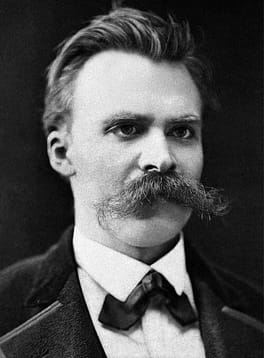
Photo: Friedrich Hermann Hartmann / Public domain (source: Wikimedia Commons)
Friedrich Nietzsche was born in Röcken, Saxony-Anhalt, Germany on October 15, 1844. Friedrich Nietzsche was credited as a philosopher, poet and writer. Death is recorded on August 25, 1900, at the age of 55. Schooling on record includes University of Bonn. Credited works include Thus Spoke Zarathustra, The Birth of Tragedy and Untimely Meditations.
My Take
Nietzsche is the philosopher I return to when life flattens out. People quote the death of God as nihilism, but I read him as the opposite: a man desperately trying to teach us how to affirm life without borrowed crutches. A prodigy professor at twenty-four, undone by illness, writing masterpieces like Thus Spoke Zarathustra in solitude while almost nobody read them; his biography is amor fati lived out loud. What moves me most is that he collapsed before his fame arrived, never knowing he had won. Few writers make suffering feel this generative, and I distrust anyone who claims to have fully understood him.
This take was written by generative AI, one per person, from publicly reported facts (editorial policy). It is a reading of the record, not reporting.
1. Profile
- Name (English)
- Friedrich Nietzsche
- Name (Japanese)
- フリードリヒ・ニーチェ
- Reading
- ふりーどりひ・にーちぇ
- Born
- October 15, 1844 – August 25, 1900
- Origin
- Röcken, Saxony-Anhalt, Germany
- Occupation
- philosopher / poet / writer / composer / pedagogue
- Zodiac / Chinese zodiac
- Libra / Dragon
2. Background
- University
- University of Bonn
3. Works & records
Filmography / notable works
| Category | Title |
|---|---|
| Notable work | Thus Spoke Zarathustra |
| Notable work | The Birth of Tragedy |
| Notable work | Untimely Meditations |
| Notable work | On the Advantage and Disadvantage of History for Life |
| Notable work | Schopenhauer as Educator |
4. Links
5. About this entry
Tags
- Last updated
Facts are limited to publicly available information up to 2024; non-public or unconfirmed items are omitted. English text is machine-assisted (facts translated by Sonnet, "My Take" written by Opus 4.8). The Japanese page is the source of record.
Frequently asked questions
When was Friedrich Nietzsche born?
Born October 15, 1844.
When did Friedrich Nietzsche die?
Died August 25, 1900, aged 55.
Where was Friedrich Nietzsche from?
Friedrich Nietzsche was from Röcken, Saxony-Anhalt, Germany.
What did Friedrich Nietzsche do?
Friedrich Nietzsche worked as philosopher, poet, writer, composer, pedagogue.
What was Friedrich Nietzsche known for?
Notable works include Thus Spoke Zarathustra, The Birth of Tragedy, Untimely Meditations.
Philosopher — see all → · Poet — see all → · More people from Germany →