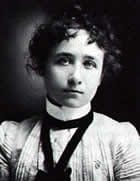
Photo: Unknown author / Public domain (source: Wikimedia Commons)
Gabriele Münter was listed as a painter, draftsperson and printmaker. Gabriele Münter was born in Berlin, Germany on February 19, 1877. Death is recorded on May 19, 1962, at the age of 85. Recorded honors include Commander's Cross of the Order of Merit of the Federal Republic of Germany and honorary golden medal of the state capital Munich.
My Take
Gabriele Münter sits, unfairly, in the long shadow of Kandinsky, but I think she deserves to be read on her own terms. What grabs me is the warmth of her color-blocked, almost folk-art directness, a real expressionist voice rather than a footnote to anyone else's. As a founding member of Der Blaue Reiter she was central to the Munich avant-garde, and her quiet courage in safeguarding the group's work through dark years says as much about her character as her canvases do. The Federal Republic's honors feel earned. I admire her independence enormously.
This take was written by generative AI, one per person, from publicly reported facts (editorial policy). It is a reading of the record, not reporting.
1. Profile
- Name (English)
- Gabriele Münter
- Name (Japanese)
- ガブリエレ・ミュンター
- Reading
- がぶりえれ・みゅんたー
- Born
- February 19, 1877 – May 19, 1962
- Origin
- Berlin, Germany
- Occupation
- painter / draftsperson / printmaker / artist / art collector
- Zodiac / Chinese zodiac
- Pisces / Ox
2. Background
Awards & achievements
- Commander's Cross of the Order of Merit of the Federal Republic of Germany
- honorary golden medal of the state capital Munich
3. Links
4. About this entry
Tags
- Last updated
Facts are limited to publicly available information up to 2024; non-public or unconfirmed items are omitted. English text is machine-assisted (facts translated by Sonnet, "My Take" written by Opus 4.8). The Japanese page is the source of record.
Frequently asked questions
When was Gabriele Münter born?
Gabriele Münter was born on February 19, 1877.
When did Gabriele Münter die?
Gabriele Münter died on May 19, 1962, aged 85.
Where was Gabriele Münter from?
Gabriele Münter was from Berlin, Germany.
What did Gabriele Münter do?
Gabriele Münter worked as painter, draftsperson, printmaker, artist, art collector.
Painter — see all → · Draftsperson — see all → · More people from Germany → · More people born on February 19 →