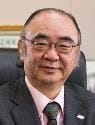
Photo: えれんれん / CC BY-SA 4.0 (source: Wikimedia Commons)
My Take
There's something quietly fascinating about a guy who grows up in Osaka, makes it all the way to the University of Tokyo, spends his career inside the stiff machinery of Japanese bureaucracy — and still finds time to write poetry. Those two worlds feel almost allergic to each other: one runs on procedure and precision, the other on feeling and ambiguity. I can't help picturing him drafting some dry administrative memo during the day and then going home to chase a metaphor in the margins. Most people flatten out into one thing; he apparently refused to. That's worth noticing.
This take was written by generative AI, one per person, from publicly reported facts (editorial policy). It is a reading of the record, not reporting.
Overview
Gania Nishimura (born April 16, 1952, in Osaka Prefecture, Japan) is a Japanese poet and government official. He graduated from the University of Tokyo and pursued a career in public administration while also working as a poet. He became Secretary-General of the Economic Research Institute for ASEAN and East Asia (ERIA) in 2008 and its senior advisor in August 2023, and writes haiku under the name Gania.
1. Profile
- Name (English)
- Gania Nishimura
- Name (Japanese)
- 西村英俊
- Reading
- にしむら ひでとし
- Born
- April 16, 1952 (age 74)
- Origin
- Osaka Prefecture, Japan
- Occupation
- Poet / Bureaucrat
- Zodiac / Chinese zodiac
- Aries / Dragon
2. Background
- University
- University of Tokyo
3. Links
4. About this entry
Tags
- Last updated
Only publicly available facts are listed; non-public or unconfirmed items are omitted. Base data was compiled from Wikidata from June 2026 onward; ages are recalculated daily and deaths are checked against Wikidata on an ongoing basis. English text is machine-assisted (facts translated by Sonnet, "My Take" written by Opus 4.8). The Japanese page is the source of record.
Frequently asked questions
When was Gania Nishimura born?
Gania Nishimura was born on April 16, 1952 and is 74 years old.
Where is Gania Nishimura from?
Gania Nishimura is from Osaka Prefecture, Japan.
What does Gania Nishimura do?
Gania Nishimura works as Poet, Bureaucrat.
Where did Gania Nishimura study?
Gania Nishimura attended University of Tokyo.
Poet — see all → · Bureaucrat — see all → · More people from Japan → · More people born on April 16 →