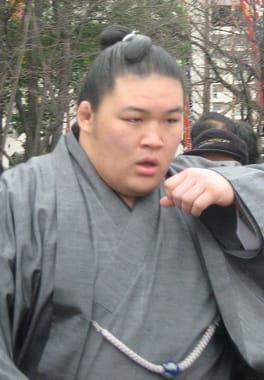
Photo: User FourTildes on en.wikipedia / CC BY-SA 3.0 (source: Wikimedia Commons)
My Take
I'll be honest, there's something I find quietly heroic about a kid from Neyagawa in Osaka deciding the sumo ring was his life's work. Gōeidō reached the sport's upper ranks in an era stacked with Mongolian giants, and just hanging on there for years tells you everything about his stubbornness. What I love is that he never felt like a showman to me; he was the meat-and-potatoes guy, a right-hand-inside belt fighter with a sharp arm throw who'd rather drive you off the dohyo than win on trickery. That kind of grinder earns my respect more than any flashy thrower. As a guy who roots for the underdog who simply outworks everyone, I can't help but pull for him.
This take was written by generative AI, one per person, from publicly reported facts (editorial policy). It is a reading of the record, not reporting.
Overview
Gōeidō Gōtarō is a Japanese former sumo wrestler (rikishi) born on April 6, 1986, in Neyagawa, Osaka Prefecture. He is an Aries born in the Year of the Tiger. Fighting for Sakaigawa stable, he reached the rank of ōzeki and, after retiring, became the elder Takekuma and head of his own stable.
1. Profile
- Name (English)
- Gōeidō Gōtarō
- Name (Japanese)
- 豪栄道豪太郎
- Reading
- ごうえいどう ごうたろう
- Real name
- 澤井豪太郎
- Born
- April 6, 1986 (age 40)
- Origin
- Neyagawa, Osaka, Japan
- Occupation
- Sumo wrestler
- Zodiac / Chinese zodiac
- Aries / Tiger
2. Links
3. About this entry
Tags
- Last updated
Only publicly available facts are listed; non-public or unconfirmed items are omitted. Base data was compiled from Wikidata from June 2026 onward; ages are recalculated daily and deaths are checked against Wikidata on an ongoing basis. English text is machine-assisted (facts translated by Sonnet, "My Take" written by Opus 4.8). The Japanese page is the source of record.
Frequently asked questions
When was Gōeidō Gōtarō born?
Gōeidō Gōtarō was born on April 6, 1986 and is 40 years old.
Where is Gōeidō Gōtarō from?
Gōeidō Gōtarō is from Neyagawa, Osaka, Japan.
What does Gōeidō Gōtarō do?
Gōeidō Gōtarō works as Sumo wrestler.
Sumo wrestler — see all → · More people from Japan → · More people born on April 6 →