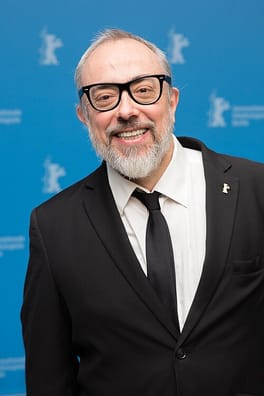
Photo: Martin Kraft / CC BY-SA 3.0 (source: Wikimedia Commons)
Álex de la Iglesia is a film director, film producer and writer. Álex de la Iglesia was born in Bilbao, Biscay, Spain on December 4, 1965. The age as of 2026 is 60. Education on record includes University of Deusto. Listed accolades include silver Medal of the Community of Madrid (2016), Goya Award for Best Director (1996), Silver Lion (2010) and 2 more.
My Take
Álex de la Iglesia is exactly the kind of director I root for: a former comic book artist who turned a taste for the grotesque into genuine art. Folding death and murder into dark comedy is a tightrope walk, and the fact that he won a Goya for Best Director in 1996 and a Silver Lion in Venice in 2010 tells me the world saw craft where others might see only bad taste. His Bilbao roots give his work a distinctly Spanish bite. I find directors who can make the unsettling feel cinematic far more interesting than those who simply play it safe.
This take was written by generative AI, one per person, from publicly reported facts (editorial policy). It is a reading of the record, not reporting.
1. Profile
- Name (English)
- Álex de la Iglesia
- Name (Japanese)
- アレックス・デ・ラ・イグレシア
- Reading
- あれっくす・で・ら・いぐれしあ
- Born
- December 4, 1965 (age 60)
- Origin
- Bilbao, Biscay, Spain
- Occupation
- film director / film producer / screenwriter / writer / film screenwriter
- Zodiac / Chinese zodiac
- Sagittarius / Snake
2. Background
- University
- University of Deusto
Awards & achievements
- 2016 silver Medal of the Community of Madrid
- 1996 Goya Award for Best Director
- 2010 Silver Lion
- 2020 Gold Medal of Merit in the Fine Arts
- 2005 Time Machine Award
3. Links
- Xhttps://x.com/AlexdelaIglesia
- Wikipedia (English)https://en.wikipedia.org/wiki/%C3%81lex%20de%20la%20Iglesia
- Wikipedia (Japanese)https://ja.wikipedia.org/wiki/%E3%82%A2%E3%83%AC%E3%83%83%E3%82%AF%E3%82%B9%E3%83%BB%E3%83%87%E3%83%BB%E3%83%A9%E3%83%BB%E3%82%A4%E3%82%B0%E3%83%AC%E3%82%B7%E3%82%A2
- Wikidatahttps://www.wikidata.org/wiki/Q250627
4. About this entry
Tags
- Last updated
Facts are limited to publicly available information up to 2024; non-public or unconfirmed items are omitted. English text is machine-assisted (facts translated by Sonnet, "My Take" written by Opus 4.8). The Japanese page is the source of record.
Frequently asked questions
When was Álex de la Iglesia born?
Born December 4, 1965 (age 60).
Where is Álex de la Iglesia from?
Álex de la Iglesia is from Bilbao, Biscay, Spain.
What does Álex de la Iglesia do?
Álex de la Iglesia works as film director, film producer, screenwriter, writer, film screenwriter.
Film director — see all → · Film producer — see all → · More people from Spain →