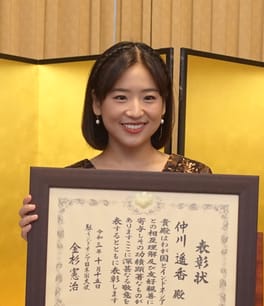
Photo: 在インドネシア日本国大使館 Embassy of Japan in Indonesia / CC BY 4.0 (source: Wikimedia Commons)
My Take
I love a career that refuses to sit still, and Haruka Nakagawa's is exactly that. A Tokyo kid, born in '92, who got her start in the Japanese idol world and then did the gutsy thing of crossing an ocean to chase it abroad rather than coasting at home. That move tells me a lot: there's a fearlessness in packing up, learning a new language and culture, and basically rebuilding your fanbase from scratch in a city that isn't yours. Add model, voice work, and acting to the resume and you've got someone who clearly hates being boxed into a single lane. I genuinely respect that restlessness, that "why not me, why not there" energy. Watching someone throw themselves at every door instead of waiting for one to open is the kind of thing that quietly makes you want to hustle a little harder yourself.
This take was written by generative AI, one per person, from publicly reported facts (editorial policy). It is a reading of the record, not reporting.
Overview
Haruka Nakagawa is a Japanese entertainer born on February 10, 1992, in Tokyo. She has been active across multiple fields including idol performance, modeling, voice acting, and acting. Known for her versatility, she has built a presence spanning several entertainment genres. Her social media accounts on Instagram and X remain active channels for connecting with fans.
1. Profile
- Name (English)
- Haruka Nakagawa
- Name (Japanese)
- 仲川遥香
- Reading
- なかがわ はるか
- Born
- February 10, 1992 (age 34)
- Origin
- Tokyo, Japan
- Height
- 160 cm
- Occupation
- Idol / Model / Voice Actress / Actress
- Zodiac / Chinese zodiac
- Aquarius / Monkey
- Blood type
- O
- Agency
- 電通インドネシア
- Active years
- 2007-4-8 -
2. Background
- Debut
- 2007-4-8
3. Works & records
Works summary
- Appearances
- 120 (2009–2014)
- By year
- 2009: 2, 2010: 7, 2011: 5, 2012: 9, 2013: 2, 2014: 4
- Debut work
- ドリル魂
Filmography / notable works
| Category | Title | Year |
|---|---|---|
| 劇場公演ユニット曲 | Higurashi no Koi | 2014 |
| Variety show | 稲川淳二の超絶こわい劇場2014 | 2014 |
| Variety show | Ini Talkshow | 2014 |
| CM | トラック・アンギン | 2014 |
| Film | Viva JKT48 | 2014 |
| TV drama | ガルーダの戦士ビマ 第21-22話 | 2013 |
| Event | トビタテ!留学JAPAN ロゴ&スローガン記者発表会 | 2013 |
| TV drama | さばドル | 2012 |
| TV anime | クレヨンしんちゃん | 2012 |
| CM | ポカリスエット | 2012 |
| Stage | 新撰組異聞PEACE MAKER 再炎 | 2012 |
| Film | くそガキの告白 | 2012 |
| Event | Japan Pop Culture Festival 2012 | 2012 |
| Event | 元気な日本展示会 | 2012 |
| Event | 木の実ナナ50周年記念コンサート?SHOW GIRLの時間旅行〜 | 2012 |
| Event | 日本プロ野球セントラル・リーグ 東京ヤクルトスワローズ対阪神タイガース第23回戦 始球式 | 2012 |
| TV drama | 桜からの手紙 〜AKB48 それぞれの卒業物語〜 | 2011 |
| TV drama | 愛と悲しみの魚たち! | 2011 |
| TV drama | マジすか学園2 最終話 | 2011 |
| Stage | もしもキミが。 | 2011 |
| Stage | 幸福レコード | 2011 |
| TV drama | マジすか学園 最終話 | 2010 |
| Stage | Arts Fusion in KANAGAWA ドリル魂 YOKOHAMA ガチンコ編 | 2010 |
| Stage | マーダーファクトリー | 2010 |
| Stage | ACT泉鏡花 | 2010 |
| Film | ×ゲーム | 2010 |
| Event | 汐留博覧会2010 ZOOM SUPER STAGE | 2010 |
| Event | お台場合衆国2010 めざましライブ | 2010 |
| Stage | ドリル魂 | 2009 |
| Film | スリーデイボーイズ | 2009 |
| シングル選抜楽曲 | RIVER | |
| シングル選抜楽曲 | Sakura no Shiori | |
| シングル選抜楽曲 | Kimi ni Au Tabi Koi wo Suru | |
| シングル選抜楽曲 | Yuuhi wo Miteiruka? | |
| シングル選抜楽曲 | Nagai Hikari | |
| シングル選抜楽曲 | Fortune Cookie Yang Mencinta | |
| シングル選抜楽曲 | First Rabbit | |
| シングル選抜楽曲 | Fortune Cookie in Love | |
| シングル選抜楽曲 | Manatsu no Sounds Good! | |
| シングル選抜楽曲 | BINGO! | |
| シングル選抜楽曲 | Flying Get | |
| シングル選抜楽曲 | Dareka no Tame ni | |
| シングル選抜楽曲 | Shoujotachi Yo | |
| シングル選抜楽曲 | Gingham Check | |
| シングル選抜楽曲 | Boku wa Ganbaru | |
| シングル選抜楽曲 | Sakura no Hanabiratachi | |
| シングル選抜楽曲 | Papan Penanda Isi Hati | |
| シングル選抜楽曲 | Dialog Dengan Kenari | |
| シングル選抜楽曲 | Message on a Placard | |
| シングル選抜楽曲 | Angin Sedang Berhembus | |
| シングル選抜楽曲 | Simpati Gravitasi | |
| シングル選抜楽曲 | The Wind is Blowing - Angin Sedang Berhembus/Kaze wa Fuiteru | |
| シングル選抜楽曲 | Pareo adalah Emerald | |
| シングル選抜楽曲 | Apel yang ada di Puncak | |
| シングル選抜楽曲 | Pareo is your Emerald | |
| シングル選抜楽曲 | Refrain Penuh Harapan | |
| シングル選抜楽曲 | Dewi Theater | |
| シングル選抜楽曲 | Refrain Full of Hope |
4. Links
5. About this entry
Tags
- Last updated
Facts are limited to publicly available information up to 2024; non-public or unconfirmed items are omitted. Works and profile fields sourced from Wikipedia reflect content as of 2026-08-26. English text is machine-assisted (facts translated by Sonnet, "My Take" written by Opus 4.8). The Japanese page is the source of record.
Frequently asked questions
When was Haruka Nakagawa born?
Born February 10, 1992 (age 34).
Where is Haruka Nakagawa from?
Haruka Nakagawa is from Tokyo, Japan.
What does Haruka Nakagawa do?
Haruka Nakagawa works as Idol, Model, Voice Actress, Actress.
How tall is Haruka Nakagawa?
Haruka Nakagawa is 160 cm.
What is Haruka Nakagawa's blood type?
O.
What agency is Haruka Nakagawa with?
Haruka Nakagawa is with 電通インドネシア.
How long has Haruka Nakagawa been active?
2007-4-8 -.
What is Haruka Nakagawa known for?
Notable works include Higurashi no Koi, 稲川淳二の超絶こわい劇場2014, Ini Talkshow.
Idol — see all → · Model — see all → · More people from Japan →