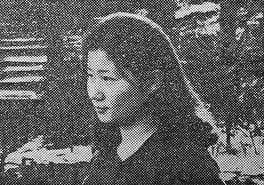
Photo: 中日新聞社 / Public domain (source: Wikimedia Commons)
My Take
I'll be honest, the first thing that hits me with Haruko Ōta is the weight of her lineage, being the daughter of Osamu Dazai, one of the most haunted, mythologized writers Japan ever produced. That's a shadow that could flatten anyone, and I kept bracing for her to be defined entirely by him. But she wasn't. Born in Odawara back in 1947, she went and built her own sentences, her own quiet voice, and walked away with the Tsubota Joji Literary Award in 1986 on her own merit, not borrowed glory. I find that genuinely moving. She strikes me as the kind of writer whose strength burns inward rather than out, no flash, no spectacle, just words carrying real body heat. I quietly admire that she chose her own road.
This take was written by generative AI, one per person, from publicly reported facts (editorial policy). It is a reading of the record, not reporting.
Overview
Haruko Ōta is a Japanese novelist born on November 12, 1947, in Odawara, Kanagawa Prefecture. She studied at Meiji Gakuin University. In 1986 she received the Tsubota Joji Literary Award, one of Japan's prizes for literature aimed at young readers. She is known for building her own literary voice independent of her celebrated family lineage.
1. Profile
- Name (English)
- Haruko Ōta
- Name (Japanese)
- 太田治子
- Reading
- おおた はるこ
- Born
- November 12, 1947 (age 78)
- Origin
- Odawara, Kanagawa Prefecture, Japan
- Occupation
- Novelist
- Zodiac / Chinese zodiac
- Scorpio / Boar
2. Background
- University
- Meiji Gakuin University
Awards & achievements
- 1986 — Tsubota Joji Literary Award
3. Links
- Wikipedia (Japanese)https://ja.wikipedia.org/wiki/%E5%A4%AA%E7%94%B0%E6%B2%BB%E5%AD%90
- Wikidatahttps://www.wikidata.org/wiki/Q10770985
4. About this entry
Tags
- Last updated
Facts are limited to publicly available information up to 2024; non-public or unconfirmed items are omitted. English text is machine-assisted (facts translated by Sonnet, "My Take" written by Opus 4.8). The Japanese page is the source of record.
Frequently asked questions
When was Haruko Ōta born?
Born November 12, 1947 (age 78).
Where is Haruko Ōta from?
Haruko Ōta is from Odawara, Kanagawa Prefecture, Japan.
What does Haruko Ōta do?
Haruko Ōta works as Novelist.