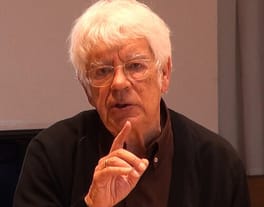
Photo: Christliches Medienmagazin pro / CC BY 2.0 (source: Wikimedia Commons)
Helmuth Rilling was a conductor, choir director and Kirchenmusikdirektor, born on May 29, 1933 in Stuttgart, Stuttgart Government Region, Germany. Education on record includes State University of Music and Performing Arts Stuttgart. Recorded honors include Order of Merit of Baden-Württemberg (1984), Knight Commander's Cross of the Order of Merit of the Federal Republic of Germany (2014), Hanns Martin Schleyer Prize (2001) and 4 more.
My Take
Helmuth Rilling is the kind of figure I respect deeply: not a flashy podium star, but a builder. He founded the Gachinger Kantorei as a student in 1954, then the Bach-Collegium Stuttgart, the Oregon Bach Festival, and the Internationale Bachakademie Stuttgart, effectively constructing the institutions that keep Bach alive worldwide. To me that's a more lasting legacy than any single recording. The honors he collected, from the Bach Medal to the Karajan Prize, reflect a lifetime treated as scholarship as much as performance. When he passed in February 2026, the Bach world lost its most patient teacher; I'd call him a custodian of a tradition rather than merely its interpreter.
This take was written by generative AI, one per person, from publicly reported facts (editorial policy). It is a reading of the record, not reporting.
1. Profile
- Name (English)
- Helmuth Rilling
- Name (Japanese)
- ヘルムート・リリング
- Reading
- へるむーと・りりんぐ
- Born
- May 29, 1933
- Origin
- Stuttgart, Stuttgart Government Region, Germany
- Occupation
- conductor / choir director / Kirchenmusikdirektor / university teacher / composer
- Zodiac / Chinese zodiac
- Gemini / Rooster
2. Background
- University
- State University of Music and Performing Arts Stuttgart
Awards & achievements
- 1984 Order of Merit of Baden-Württemberg
- 2014 Knight Commander's Cross of the Order of Merit of the Federal Republic of Germany
- 2001 Hanns Martin Schleyer Prize
- 1995 Theodor Heuss Award
- 2011 Herbert von Karajan Music Prize
- 2004 Bach Medal
- 2004 Otto Hirsch Medal
3. Links
4. About this entry
Tags
- Last updated
Facts are limited to publicly available information up to 2024; non-public or unconfirmed items are omitted. English text is machine-assisted (facts translated by Sonnet, "My Take" written by Opus 4.8). The Japanese page is the source of record.
Frequently asked questions
When was Helmuth Rilling born?
Born May 29, 1933.
Where was Helmuth Rilling from?
Helmuth Rilling was from Stuttgart, Stuttgart Government Region, Germany.
What did Helmuth Rilling do?
Helmuth Rilling worked as conductor, choir director, Kirchenmusikdirektor, university teacher, composer.