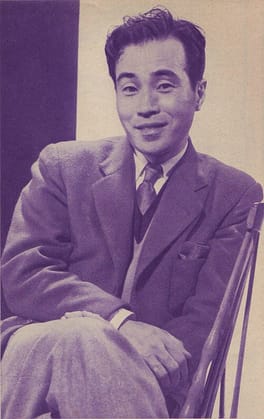
Photo: 映画世界社 (Eiga Sekai Publications, Inc.) / Public domain (source: Wikimedia Commons)
Hisaya Morishige, born on May 4, 1913 in Hirakata, Osaka Prefecture, Japan, was a singer, entrepreneur and announcer. Death is recorded on November 10, 2009, at the age of 96. Education on record includes Osaka Prefectural Kitano High School and Waseda University. Awards on record include Order of Culture (1991), Medal with Purple Ribbon (1975), Person of Cultural Merit (1984) and 4 more. The listed height was 168 cm.
My Take
Hisaya Morishige (1913-2009) had one of the widest resumes in Japanese entertainment. Born in Hirakata outside Osaka, schooled at Kitano and Waseda, he started as a stage actor and then worked as an NHK announcer in Manchukuo. After the war he became everything at once: film comedian, dramatic actor, stage lead, singer, songwriter. His song Shiretoko Ryojo is still sung all over Japan. He received the Order of Culture in 1991 and the People's Honour Award in 2009, the year he died. He is my proof that a career too broad to file under one label can be the one people remember longest.
This take was written by generative AI, one per person, from publicly reported facts (editorial policy). It is a reading of the record, not reporting.
1. Profile
- Name (English)
- Hisaya Morishige
- Name (Japanese)
- 森繁久彌
- Reading
- もりしげ ひさや
- Born
- May 4, 1913 – November 10, 2009
- Origin
- Hirakata, Osaka Prefecture, Japan
- Height
- 168 cm
- Occupation
- singer / entrepreneur / announcer / actor / singer-songwriter
- Zodiac / Chinese zodiac
- Taurus / Ox
- Blood type
- B
- Active years
- 1936 - 2009
2. Background
- High school
- Osaka Prefectural Kitano High School
- University
- Waseda University
Awards & achievements
- 1991 Order of Culture
- 1975 Medal with Purple Ribbon
- 1984 Person of Cultural Merit
- 2009 People's Honour Award
- 1956 Blue Ribbon Awards for Best Actor
- Golden Arrow Award
- Kikuta Kazuo engeki shō
3. Relationships
- Spouse
- 森繁満壽子
4. Works & records
Works summary
- Appearances
- 312 (1950–2010)
- By year
- 1950: 4, 1951: 2, 1952: 6, 1953: 8, 1954: 3, 1955: 10, 1956: 10, 1957: 4, 1958: 12, 1959: 6, 1960: 11, 1961: 9, 1962: 9, 1963: 10, 1964: 11, 1965: 7, 1966: 8, 1967: 7, 1968: 4, 1969: 6, 1970: 4, 1971: 4, 1972: 3, 1973: 3, 1974: 3, 1975: 4, 1976: 7, 1977: 7, 1978: 5, 1979: 3, 1980: 4, 1981: 4, 1982: 4, 1983: 7, 1984: 4, 1985: 4, 1986: 4, 1987: 5, 1988: 3, 1989: 3, 1990: 3, 1992: 2, 1993: 5, 1994: 3, 1995: 2, 1996: 4, 1997: 8, 1998: 2, 1999: 3, 2000: 1, 2001: 8, 2003: 2, 2004: 2, 2007: 1, 2008: 1, 2009: 1, 2010: 2
- Debut work
- 腰抜け二刀流
Filmography / notable works
| Category | Title | Year |
|---|---|---|
| Other TV programs | 2010年2月1日放送 | 2010 |
| コンパクトディスク | 森繁久彌 歌の旅 映画の人生 | 2010 |
| Other TV programs | 2009年11月12日放送 | 2009 |
| コンパクトディスク | あの唄 この唄 僕の唄 | 2008 |
| コンパクトディスク | 森繁久彌大全集 | 2007 |
| Other | 死に花 | 2004 |
| TV drama | 向田邦子の恋文 | 2004 |
| TV drama | 1000回記念3時間スペシャル | 2003 |
| コンパクトディスク | 望郷詩集 | 2003 |
| Voice appearance | ドラえもん のび太と翼の勇者たち | 2001 |
| TV drama | 鍵老人 | 2001 |
| TV drama | 幽霊城の姫君 | 2001 |
| TV drama | こちら第三社会部 | 2001 |
| Other TV programs | 2001年2月2日放送 | 2001 |
| Other TV programs | 森繁久彌 世紀を越えて88歳〜名優と語る温故知新〜 | 2001 |
| Other TV programs | 知床悠久の半島 | 2001 |
| コンパクトディスク | 愛誦詩集 | 2001 |
| TV drama | あ・うん | 2000 |
| TV drama | 新春ワイド時代劇 / 赤穂浪士 | 1999 |
| TV drama | 永遠のアトム 手塚治虫物語 | 1999 |
| TV drama | 怒る男 わらう女 | 1999 |
| TV drama | 人情馬鹿物語 | 1998 |
| TV drama | 飛んで火に入る春の嫁 | 1998 |
| Other | GOING WEST 西へ… | 1997 |
| Other | 新サラリーマン専科 | 1997 |
| Voice appearance | もののけ姫 | 1997 |
| Voice appearance | ヘラクレス | 1997 |
| Voice appearance | どんぐりの家 | 1997 |
| TV drama | 森繁久彌ドラマスペシャル・おじいさんの台所 | 1997 |
| TV drama | 南町奉行捕物帖 怒れ!求馬 第1話・第2話 | 1997 |
| Other TV programs | 1997年4月29日放送 | 1997 |
| TV drama | 響子 | 1996 |
| TV drama | 鶴の行方 | 1996 |
| TV drama | 大岡越前 | 1996 |
| コンパクトディスク | 森繁久彌全集 〜青春が花ならば〜 | 1996 |
| TV drama | 白いお髭の意地比べ・萩 | 1995 |
| TV drama | 過去からの告発 | 1995 |
| Other | 四十七人の刺客 | 1994 |
| TV drama | 江戸を斬るVIII | 1994 |
| TV drama | 銀色の恋文 | 1994 |
| TV drama | 悪計暴いた備前焼・岡山 | 1993 |
| TV drama | 鶴姫伝奇 -興亡瀬戸内水軍- | 1993 |
| TV drama | 清左衛門残日録 | 1993 |
| Other TV programs | 1993年1月28日放送 | 1993 |
| Other TV programs | 1993年5月4日放送 | 1993 |
| Voice appearance | せんぼんまつばら 川と生きる少年たち | 1992 |
| TV drama | 社長になった若大将 | 1992 |
| Other | 流転の海 | 1990 |
| TV drama | 勝海舟 | 1990 |
| TV drama | 新春ドラマスペシャル みんな玉子焼き | 1990 |
| Other | 開港風雲録 YOUNG JAPAN | 1989 |
| TV drama | 翔んでる!平賀源内 | 1989 |
| Other TV programs | 1989年2月2日放送 | 1989 |
| TV drama | 五稜郭 | 1988 |
| TV drama | 森繁久彌ドラマ 花くらべ | 1988 |
| Lyrics / composition | 能登の夢 | 1988 |
| Voice appearance | ラッコ物語 | 1987 |
| Voice appearance | 風が吹くとき | 1987 |
| TV drama | 江戸を斬るVII | 1987 |
| TV drama | 麗子の足 | 1987 |
5. Links
- Wikipedia (English)https://en.wikipedia.org/wiki/Hisaya%20Morishige
- Wikipedia (Japanese)https://ja.wikipedia.org/wiki/%E6%A3%AE%E7%B9%81%E4%B9%85%E5%BD%8C
- Wikidatahttps://www.wikidata.org/wiki/Q1078152
6. About this entry
Tags
- Last updated
Facts are limited to publicly available information up to 2024; non-public or unconfirmed items are omitted. Works and profile fields sourced from Wikipedia reflect content as of 2026-08-26. English text is machine-assisted (facts translated by Sonnet, "My Take" written by Opus 4.8). The Japanese page is the source of record.
Frequently asked questions
When was Hisaya Morishige born?
Born May 4, 1913.
When did Hisaya Morishige die?
Died November 10, 2009, aged 96.
Where was Hisaya Morishige from?
Hisaya Morishige was from Hirakata, Osaka Prefecture, Japan.
What did Hisaya Morishige do?
Hisaya Morishige worked as singer, entrepreneur, announcer, actor, singer-songwriter.
How tall was Hisaya Morishige?
Hisaya Morishige was 168 cm.
What was Hisaya Morishige's blood type?
B.
When was Hisaya Morishige active?
1936 - 2009.
What was Hisaya Morishige known for?
Notable works include 2010年2月1日放送, 森繁久彌 歌の旅 映画の人生, 2009年11月12日放送.
Singer — see all → · Entrepreneur — see all → · More people from Japan →