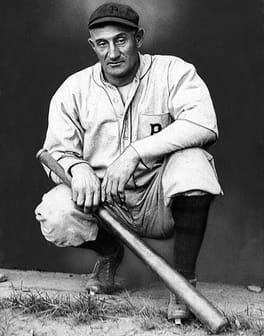
Photo: unattributed / Public domain (source: Wikimedia Commons)
Born on February 24, 1874, Honus Wagner was from Chartiers, Pennsylvania, United States. Honus Wagner was credited as a baseball player. Death is recorded on December 6, 1955, at the age of 81. The listed height was 180 cm.
My Take
Honus Wagner is one of those figures from early baseball history who genuinely gets more impressive the closer you look. A coal miner's son from western Pennsylvania who became arguably the greatest shortstop who ever lived — he hit .328 lifetime, won eight National League batting titles, and did it all with a stocky, bow-legged build that looked nothing like a prototype athlete. What I love about Wagner is that he played in the dead-ball era, when conditions were brutal and statistics were kept loosely, yet he still dominates any serious conversation about the all-time greats. He was one of the five charter inductees into the Baseball Hall of Fame in 1936, and his T206 tobacco card became the most famous and valuable sports card in history. There's something almost mythic about a guy who retired in 1917 and still casts that long a shadow over the game.
This take was written by generative AI, one per person, from publicly reported facts (editorial policy). It is a reading of the record, not reporting.
1. Profile
- Name (English)
- Honus Wagner
- Name (Japanese)
- ホーナス・ワグナー
- Reading
- ほーなす・わぐなー
- Born
- February 24, 1874 – December 6, 1955
- Origin
- Chartiers, Pennsylvania, United States
- Height
- 180 cm
- Occupation
- baseball player
- Zodiac / Chinese zodiac
- Pisces / Dog
2. Links
3. About this entry
Tags
- Last updated
Facts are limited to publicly available information up to 2024; non-public or unconfirmed items are omitted. English text is machine-assisted (facts translated by Sonnet, "My Take" written by Opus 4.8). The Japanese page is the source of record.
Frequently asked questions
When was Honus Wagner born?
Born February 24, 1874.
When did Honus Wagner die?
Died December 6, 1955, aged 81.
Where was Honus Wagner from?
Honus Wagner was from Chartiers, Pennsylvania, United States.
What did Honus Wagner do?
Honus Wagner worked as baseball player.
How tall was Honus Wagner?
Honus Wagner was 180 cm.
Baseball player — see all → · More people from the United States →