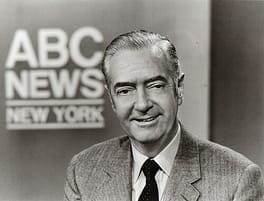
Photo: ABC News / Public domain (source: Wikimedia Commons)
Howard K. Smith was credited as a war correspondent, actor and television presenter. Born on May 12, 1914, Howard K. Smith was from Ferriday, Louisiana, United States. Death is recorded on February 15, 2002, at the age of 87. Schooling on record includes Alcee Fortier High School and Tulane University of Louisiana. Listed accolades include George Polk Award (1959) and Rhodes Scholarship (1937).
My Take
Howard K. Smith feels like a relic of an era when journalism carried moral weight, and that is exactly why I keep coming back to him. A Rhodes Scholar from small-town Louisiana who became one of Murrow's Boys, he reported from the heart of war and later anchored the news with a commentator's conscience. What strikes me is the range: war correspondent, anchorman, even film actor. The George Polk Award confirms the craft, but I admire the backbone more than the resume. In an age of disposable headlines, his career reminds me what a principled, durable voice in broadcasting actually looks like.
This take was written by generative AI, one per person, from publicly reported facts (editorial policy). It is a reading of the record, not reporting.
1. Profile
- Name (English)
- Howard K. Smith
- Name (Japanese)
- ニュースキャスター
- Reading
- にゅーすきゃすたー
- Born
- May 12, 1914 – February 15, 2002
- Origin
- Ferriday, Louisiana, United States
- Occupation
- war correspondent / actor / television presenter / journalist / news presenter
- Zodiac / Chinese zodiac
- Taurus / Tiger
2. Background
- High school
- Alcee Fortier High School
- University
- Tulane University of Louisiana
Awards & achievements
- 1959 George Polk Award
- 1937 Rhodes Scholarship
3. Links
4. About this entry
Tags
- Last updated
Facts are limited to publicly available information up to 2024; non-public or unconfirmed items are omitted. English text is machine-assisted (facts translated by Sonnet, "My Take" written by Opus 4.8). The Japanese page is the source of record.
Frequently asked questions
When was Howard K. Smith born?
Born May 12, 1914.
When did Howard K. Smith die?
Died February 15, 2002, aged 87.
Where was Howard K. Smith from?
Howard K. Smith was from Ferriday, Louisiana, United States.
What did Howard K. Smith do?
Howard K. Smith worked as war correspondent, actor, television presenter, journalist, news presenter.