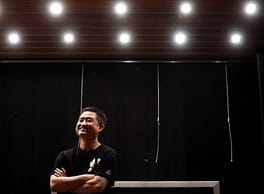
Photo: Myself / CC BY-SA 4.0 (source: Wikimedia Commons)
Huang Teng-hui is a painter, born on December 5, 1959 in Ruisui Township, Hualien County, Taiwan. Huang Teng-hui is 66 years old as of 2026. Education on record includes Tunghai University.
My Take
Huang Teng-hui, also known as Robert Huang, fascinates me as a rare hybrid of artist and builder. Born in the lush Ruisui Township of Hualien, he studied at Tunghai University and pursued doctoral work at Tsinghua in Beijing, then helped found Utopia, one of Taichung's earliest communal redevelopment projects in 1985. A painter who is also an entrepreneur, holding brush and civic vision in the same hands, is a genuinely uncommon figure. The fact that his official site is a Rose Museum convinces me he poured his soul into the rose.
This take was written by generative AI, one per person, from publicly reported facts (editorial policy). It is a reading of the record, not reporting.
1. Profile
- Name (English)
- Huang Teng-hui
- Name (Japanese)
- 黄騰輝
- Reading
- こう とうき
- Born
- December 5, 1959 (age 66)
- Origin
- Ruisui Township, Hualien County, Taiwan
- Occupation
- painter
- Zodiac / Chinese zodiac
- Sagittarius / Boar
2. Background
- University
- Tunghai University
3. Links
- Official sitehttp://www.rosemuseum.com/
- Wikipedia (English)https://en.wikipedia.org/wiki/Huang%20Teng-hui
- Wikipedia (Japanese)https://ja.wikipedia.org/wiki/%E9%BB%84%E9%A8%B0%E8%BC%9D
- Wikidatahttps://www.wikidata.org/wiki/Q9032978
4. About this entry
Tags
- Last updated
Facts are limited to publicly available information up to 2024; non-public or unconfirmed items are omitted. English text is machine-assisted (facts translated by Sonnet, "My Take" written by Opus 4.8). The Japanese page is the source of record.
Frequently asked questions
When was Huang Teng-hui born?
Born December 5, 1959 (age 66).
Where is Huang Teng-hui from?
Huang Teng-hui is from Ruisui Township, Hualien County, Taiwan.
What does Huang Teng-hui do?
Huang Teng-hui works as painter.