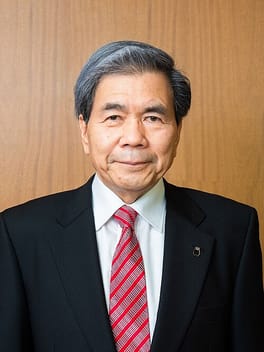
Photo: 内閣府 地方創生推進室 / CC BY 4.0 (source: Wikimedia Commons)
My Take
Here's a guy who genuinely walked an unusual path: rural Kumamoto kid becomes a political science professor, gets his graduate education in Nebraska of all places, and then — after decades of academia — decides to actually run for office and becomes governor of Kumamoto Prefecture. Most political scientists stay safely behind the lectern analyzing power; Kabashima went and grabbed some. There's something almost refreshingly nerdy about that move, like he looked at his own research and thought, "Alright, let me test this empirically." I don't know if the governorship lived up to the theory, but the sheer audacity of the pivot — scholar to politician in your sixties — earns him some genuine respect in my book.
This take was written by generative AI, one per person, from publicly reported facts (editorial policy). It is a reading of the record, not reporting.
Overview
Ikuo Kabashima is a Japanese political scientist and politician born on January 28, 1947, in Inada Village, Kumamoto Prefecture, Japan. He studied at the University of Nebraska–Lincoln. He is recognized for his academic and political career in Japan.
1. Profile
- Name (English)
- Ikuo Kabashima
- Name (Japanese)
- 蒲島郁夫
- Reading
- かばしま いくお
- Born
- January 28, 1947 (age 79)
- Origin
- Inada Village, Kumamoto Prefecture, Japan
- Occupation
- Political Scientist / Politician
- Zodiac / Chinese zodiac
- Aquarius / Boar
2. Background
- University
- University of Nebraska–Lincoln
3. Links
- Wikipedia (Japanese)https://ja.wikipedia.org/wiki/%E8%92%B2%E5%B3%B6%E9%83%81%E5%A4%AB
- Wikidatahttps://www.wikidata.org/wiki/Q1658176
4. About this entry
Tags
- Last updated
Only publicly available facts are listed; non-public or unconfirmed items are omitted. Base data was compiled from Wikidata from June 2026 onward; ages are recalculated daily and deaths are checked against Wikidata on an ongoing basis. English text is machine-assisted (facts translated by Sonnet, "My Take" written by Opus 4.8). The Japanese page is the source of record.
Frequently asked questions
When was Ikuo Kabashima born?
Ikuo Kabashima was born on January 28, 1947 and is 79 years old.
Where is Ikuo Kabashima from?
Ikuo Kabashima is from Inada Village, Kumamoto Prefecture, Japan.
What does Ikuo Kabashima do?
Ikuo Kabashima works as Political Scientist, Politician.
Where did Ikuo Kabashima study?
Ikuo Kabashima attended University of Nebraska–Lincoln.
Political Scientist — see all → · Politician — see all → · More people from Japan → · More people born on January 28 →