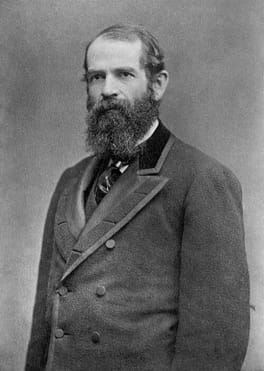
Photo: Bain News Service, publisher Restoration by Adam Cuerden / Public domain (source: Wikimedia Commons)
Born on May 27, 1836, Jay Gould was from Roxbury, New York, United States. Jay Gould was an entrepreneur, financier and cartographer. Death is recorded on December 2, 1892, at the age of 56.
My Take
I find Jay Gould one of the most fascinating villains of the Gilded Age. When I read that he founded a business dynasty as a railroad magnate and speculator, what strikes me isn't the wealth but how thoroughly disliked he was, both in his own lifetime and ever since. The robber baron label has clung to him for over a century, and I think that staying power says something. He's a useful reminder to me that being one of the richest men of the late nineteenth century guaranteed him neither popularity nor a clean legacy. I keep coming back to how sharp and ruthless his methods reportedly were.
This take was written by generative AI, one per person, from publicly reported facts (editorial policy). It is a reading of the record, not reporting.
1. Profile
- Name (English)
- Jay Gould
- Name (Japanese)
- ジェイ・グールド
- Reading
- じぇい・ぐーるど
- Born
- May 27, 1836 – December 2, 1892
- Origin
- Roxbury, New York, United States
- Occupation
- entrepreneur / financier / cartographer / business magnate / speculator
- Zodiac / Chinese zodiac
- Gemini / Monkey
2. Links
- Wikipedia (English)https://en.wikipedia.org/wiki/Jay%20Gould
- Wikipedia (Japanese)https://ja.wikipedia.org/wiki/%E3%82%B8%E3%82%A7%E3%82%A4%E3%83%BB%E3%82%B0%E3%83%BC%E3%83%AB%E3%83%89
- Wikidatahttps://www.wikidata.org/wiki/Q709595
3. About this entry
Tags
- Last updated
Facts are limited to publicly available information up to 2024; non-public or unconfirmed items are omitted. English text is machine-assisted (facts translated by Sonnet, "My Take" written by Opus 4.8). The Japanese page is the source of record.
Frequently asked questions
When was Jay Gould born?
Born May 27, 1836.
When did Jay Gould die?
Died December 2, 1892, aged 56.
Where was Jay Gould from?
Jay Gould was from Roxbury, New York, United States.
What did Jay Gould do?
Jay Gould worked as entrepreneur, financier, cartographer, business magnate, speculator.
Entrepreneur — see all → · Financier — see all → · More people from the United States →