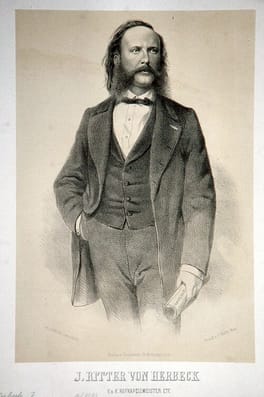
Photo: Karl Lanzedelly / Public domain (source: Wikimedia Commons)
Johann von Herbeck was listed as a conductor, composer and musician. Born on December 25, 1831, Johann von Herbeck was from Vienna, Austria. Death is recorded on October 28, 1877, at the age of 45. Awards on record include Knight's Cross of the Order of Franz Joseph, Order of Saint Stanislaus, 2nd class, Knight of the Order of the Iron Crown (Austria) and 2 more.
My Take
Johann von Herbeck earns a special kind of admiration from me. A decorated Austrian conductor and composer, he's remembered above all for premiering Schubert's "Unfinished" Symphony, dragging a masterpiece out of decades of obscurity and giving it to the world. There's something profoundly moving about a musician whose greatest legacy is resurrecting another man's genius rather than his own compositions. He died at just 45, far too soon, yet without his curiosity that beloved work might have stayed buried. I'm drawn to these unsung enablers of culture: the ones who ensure greatness gets heard. History owes them more gratitude than it usually pays.
This take was written by generative AI, one per person, from publicly reported facts (editorial policy). It is a reading of the record, not reporting.
1. Profile
- Name (English)
- Johann von Herbeck
- Name (Japanese)
- ヨハン・ヘルベック
- Reading
- よはん・へるべっく
- Born
- December 25, 1831 – October 28, 1877
- Origin
- Vienna, Austria
- Occupation
- conductor / composer / musician
- Zodiac / Chinese zodiac
- Capricorn / Rabbit
2. Background
Awards & achievements
- Knight's Cross of the Order of Franz Joseph
- Order of Saint Stanislaus, 2nd class
- Knight of the Order of the Iron Crown (Austria)
- Officer of the Imperial Order of the Rose
- Knight First Class of the Order of Ernst August
3. Links
4. About this entry
Tags
- Last updated
Facts are limited to publicly available information up to 2024; non-public or unconfirmed items are omitted. English text is machine-assisted (facts translated by Sonnet, "My Take" written by Opus 4.8). The Japanese page is the source of record.
Frequently asked questions
When was Johann von Herbeck born?
Born December 25, 1831.
When did Johann von Herbeck die?
Died October 28, 1877, aged 45.
Where was Johann von Herbeck from?
Johann von Herbeck was from Vienna, Austria.
What did Johann von Herbeck do?
Johann von Herbeck worked as conductor, composer, musician.
Conductor — see all → · Composer — see all → · More people from Austria →