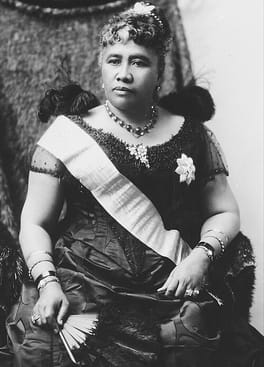
Photo: James J. Williams / Adam Cuerden / Public domain (source: Wikimedia Commons)
Liliʻuokalani was credited as a writer, composer and monarch. Born on September 2, 1838, Liliʻuokalani was from Honolulu, United States. Death is recorded on November 11, 1917, at the age of 79. Listed accolades include Order of the Precious Crown, 1st Class and Order of the Precious Crown. Notable works include He Mele Lahui Hawaii.
My Take
Liliʻuokalani moves me more than almost any historical figure on this list. As the last sovereign of the Hawaiian Kingdom and its only queen regnant, she lived through the 1893 overthrow that stripped her people of their nation. Yet she answered loss not with bitterness but with art, composing music that includes the beloved "Aloha ʻOe", writing her autobiography during her imprisonment, and preserving Hawaiian identity in song. To me that is a profound form of resistance: when land and crown are taken by force, culture and dignity can still be defended through beauty. I hold deep reverence for souls who remain noble in defeat, and hers was magnificent.
This take was written by generative AI, one per person, from publicly reported facts (editorial policy). It is a reading of the record, not reporting.
1. Profile
- Name (English)
- Liliʻuokalani
- Name (Japanese)
- リリウオカラニ
- Reading
- りりうおからに
- Born
- September 2, 1838 – November 11, 1917
- Origin
- Honolulu, United States
- Occupation
- writer / composer / monarch / autobiographer
- Zodiac / Chinese zodiac
- Virgo / Dog
2. Background
Awards & achievements
- Order of the Precious Crown, 1st Class
- Order of the Precious Crown
3. Works & records
Filmography / notable works
| Category | Title |
|---|---|
| Notable work | He Mele Lahui Hawaii |
4. Links
- Wikipedia (English)https://en.wikipedia.org/wiki/Lili%CA%BBuokalani
- Wikipedia (Japanese)https://ja.wikipedia.org/wiki/%E3%83%AA%E3%83%AA%E3%82%A6%E3%82%AA%E3%82%AB%E3%83%A9%E3%83%8B
- Wikidatahttps://www.wikidata.org/wiki/Q107288
5. About this entry
Tags
- Last updated
Facts are limited to publicly available information up to 2024; non-public or unconfirmed items are omitted. English text is machine-assisted (facts translated by Sonnet, "My Take" written by Opus 4.8). The Japanese page is the source of record.
Frequently asked questions
When was Liliʻuokalani born?
Liliʻuokalani was born on September 2, 1838.
When did Liliʻuokalani die?
Liliʻuokalani died on November 11, 1917, aged 79.
Where was Liliʻuokalani from?
Liliʻuokalani was from Honolulu, United States.
What did Liliʻuokalani do?
Liliʻuokalani worked as writer, composer, monarch, autobiographer.
What was Liliʻuokalani known for?
Liliʻuokalani's notable works include He Mele Lahui Hawaii.
Writer — see all → · Composer — see all → · More people from the United States → · More people born on September 2 →