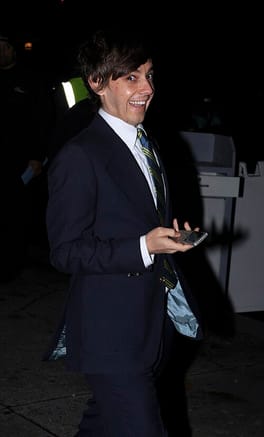
Photo: No machine-readable author provided. Christopher Peterson assumed (based on copyright claims). / CC BY-SA 3.0 (source: Wikimedia Commons)
Jorma Taccone is a film actor, screenwriter and television actor, born on March 19, 1977 in Berkeley, California, United States. As of 2026, Jorma Taccone is 49 years old. Schooling on record includes Berkeley High School and University of California, Los Angeles.
My Take
What I admire most about Jorma Taccone is how he turned childhood friendship into a creative engine. With Andy Samberg and Akiva Schaffer in The Lonely Island, he helped redefine what comedy on SNL could be, blurring the line between song parody and genuine craft. As a writer, director, actor, and musician all at once, he could have chased solo stardom, yet he keeps choosing collaboration. Directing MacGruber proved he can commit fully to a deadpan absurd vision. To me, that mix of versatility and loyalty, plus the willingness to look ridiculous on purpose, marks a rare kind of confident, generous comic intelligence worth celebrating.
This take was written by generative AI, one per person, from publicly reported facts (editorial policy). It is a reading of the record, not reporting.
1. Profile
- Name (English)
- Jorma Taccone
- Name (Japanese)
- ヨーマ・タコンヌ
- Reading
- よーま・たこんぬ
- Born
- March 19, 1977 (age 49)
- Origin
- Berkeley, California, United States
- Occupation
- film actor / screenwriter / television actor / singer / film director
- Zodiac / Chinese zodiac
- Pisces / Snake
2. Background
- High school
- Berkeley High School
- University
- University of California, Los Angeles
3. Links
4. About this entry
Tags
- Last updated
Facts are limited to publicly available information up to 2024; non-public or unconfirmed items are omitted. English text is machine-assisted (facts translated by Sonnet, "My Take" written by Opus 4.8). The Japanese page is the source of record.
Frequently asked questions
When was Jorma Taccone born?
Born March 19, 1977 (age 49).
Where is Jorma Taccone from?
Jorma Taccone is from Berkeley, California, United States.
What does Jorma Taccone do?
Jorma Taccone works as film actor, screenwriter, television actor, singer, film director.
Film actor — see all → · Screenwriter — see all → · More people from the United States →