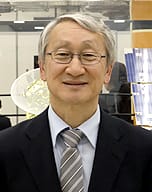
Photo: 中部経済産業局 / CC BY 4.0 (source: Wikimedia Commons)
My Take
There's a certain kind of quiet hero who never trends on social media but absolutely should, and Jun'ichiro Kawaguchi is exactly that guy. He grew up in Hirosaki, deep in Aomori snow country, went to the University of Tokyo, and ended up at JAXA steering one of the most audacious space missions ever attempted — sending the Hayabusa probe to asteroid Itokawa, over 300 million kilometers away, collecting a sample, and coaxing the thing back home after it went nearly silent and everyone assumed it was lost. The fact that Hayabusa limped back to Earth in 2010 after years of malfunctions, against what seemed like impossible odds, is one of those real-life stories that makes scripted drama feel lazy. Kawaguchi didn't give up on his spacecraft, and honestly that stubbornness from a kid out of northern Japan saving a probe that the universe kept trying to kill is just genuinely moving to me.
This take was written by generative AI, one per person, from publicly reported facts (editorial policy). It is a reading of the record, not reporting.
Overview
Jun'ichirō Kawaguchi is a Japanese scientist born on September 24, 1955, in Hirosaki, Aomori Prefecture, Japan. He studied at the University of Tokyo. He is recognized as a scientist with roots in Aomori Prefecture.
1. Profile
- Name (English)
- Jun'ichirō Kawaguchi
- Name (Japanese)
- 川口淳一郎
- Reading
- かわぐち じゅんいちろう
- Born
- September 24, 1955 (age 70)
- Origin
- Hirosaki, Aomori Prefecture, Japan
- Occupation
- Scientist
- Zodiac / Chinese zodiac
- Libra / Goat
2. Background
- University
- University of Tokyo
3. Links
4. About this entry
Tags
- Last updated
Facts are limited to publicly available information up to 2024; non-public or unconfirmed items are omitted. English text is machine-assisted (facts translated by Sonnet, "My Take" written by Opus 4.8). The Japanese page is the source of record.
Frequently asked questions
When was Jun'ichirō Kawaguchi born?
Born September 24, 1955 (age 70).
Where is Jun'ichirō Kawaguchi from?
Jun'ichirō Kawaguchi is from Hirosaki, Aomori Prefecture, Japan.
What does Jun'ichirō Kawaguchi do?
Jun'ichirō Kawaguchi works as Scientist.