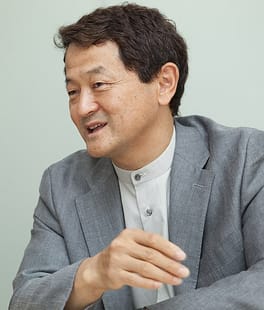
Photo: Sam Kaskadian / Public domain (source: Wikimedia Commons)
My Take
There's something almost too perfect about an architect coming out of Iwakuni — a city whose most famous landmark is Kintaikyo Bridge, that five-arched wooden masterpiece that's been rebuilt and refined across centuries. If you grow up with that kind of beauty as your everyday backdrop, maybe it just seeps into how you see the world. Jun Mitsui was born in 1955, went all the way through the University of Tokyo, and has spent his career doing the quiet, serious work of designing buildings — the kind of work where the payoff takes years and the results outlast you by decades. His record is almost entirely buildings, from Nihonbashi Mitsui Tower to Terminal 2 of Tokyo International Airport, which honestly reads to me as a craftsman who'd rather let the buildings speak. I have a lot of respect for that. Architecture is not a field that rewards impatience, and those who grind through Tokyo's toughest engineering program tend not to be impatient.
This take was written by generative AI, one per person, from publicly reported facts (editorial policy). It is a reading of the record, not reporting.
Overview
Jun Mitsui is a Japanese architect born in 1955 in Iwakuni, Yamaguchi Prefecture. He graduated from the University of Tokyo. After earning a master's degree at Yale, he worked at Cesar Pelli & Associates in the United States, returned to Tokyo in 1992 to head Pelli Clarke Pelli Architects Japan, and founded his own firm in 1995; his work includes Nihonbashi Mitsui Tower and Terminal 2 of Tokyo International Airport.
1. Profile
- Name (English)
- Jun Mitsui
- Name (Japanese)
- 光井純
- Reading
- みつい じゅん
- Born
- 1955
- Origin
- Iwakuni, Yamaguchi Prefecture, Japan
- Occupation
- Architect
- Zodiac / Chinese zodiac
- Goat
2. Background
- University
- University of Tokyo
3. Links
- Wikipedia (Japanese)https://ja.wikipedia.org/wiki/%E5%85%89%E4%BA%95%E7%B4%94
- Wikidatahttps://www.wikidata.org/wiki/Q6311515
4. About this entry
Tags
- Last updated
Only publicly available facts are listed; non-public or unconfirmed items are omitted. Base data was compiled from Wikidata from June 2026 onward; ages are recalculated daily and deaths are checked against Wikidata on an ongoing basis. English text is machine-assisted (facts translated by Sonnet, "My Take" written by Opus 4.8). The Japanese page is the source of record.
Frequently asked questions
Where is Jun Mitsui from?
Jun Mitsui is from Iwakuni, Yamaguchi Prefecture, Japan.
What does Jun Mitsui do?
Jun Mitsui works as Architect.
Where did Jun Mitsui study?
Jun Mitsui attended University of Tokyo.