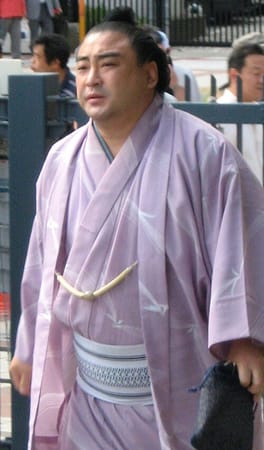
Photo: FourTildes / CC BY-SA 3.0 (source: Wikimedia Commons)
My Take
Kaiho Ryoji is one of those sumo wrestlers whose ring name just stops you cold — "sea" and "peng," that mythical giant bird from Chinese lore, soaring over the ocean. Whoever gave him that name had a real poet's eye. Born in 1973 in Aomori, which is about as far north and cold as mainland Japan gets, so you know the guy was forged tough from the start. What I find genuinely interesting is that he went all the way to Nihon University before stepping into the professional sumo world — that's not the typical path, and it tells you something about the kind of deliberate, thoughtful person he is. Most people picture sumo wrestlers as pure instinct and raw power, but the ones with an education behind them tend to have a tactical edge that holds up longer in a career. Kaiho always struck me as someone who thought about the sport, not just fought it.
This take was written by generative AI, one per person, from publicly reported facts (editorial policy). It is a reading of the record, not reporting.
Overview
Kaihō Ryōji is a former Japanese sumo wrestler born on April 17, 1973, in Aomori Prefecture, Japan. He attended Nihon University before entering the sumo world. His ring name, written with the characters for "sea" and "roc," evokes a grand, soaring image befitting a competitor from the rugged north of Japan.
1. Profile
- Name (English)
- Kaihō Ryōji
- Name (Japanese)
- 海鵬涼至
- Reading
- かいほう りょうじ
- Real name
- 熊谷涼至
- Born
- April 17, 1973 (age 53)
- Origin
- Aomori Prefecture, Japan
- Occupation
- Sumo wrestler
- Zodiac / Chinese zodiac
- Aries / Ox
2. Background
- University
- Nihon University
3. Links
- Wikipedia (Japanese)https://ja.wikipedia.org/wiki/%E6%B5%B7%E9%B5%AC%E6%B6%BC%E8%87%B3
- Wikidatahttps://www.wikidata.org/wiki/Q6347704
4. About this entry
Tags
- Last updated
Only publicly available facts are listed; non-public or unconfirmed items are omitted. Base data was compiled from Wikidata from June 2026 onward; ages are recalculated daily and deaths are checked against Wikidata on an ongoing basis. English text is machine-assisted (facts translated by Sonnet, "My Take" written by Opus 4.8). The Japanese page is the source of record.
Frequently asked questions
When was Kaihō Ryōji born?
Kaihō Ryōji was born on April 17, 1973 and is 53 years old.
Where is Kaihō Ryōji from?
Kaihō Ryōji is from Aomori Prefecture, Japan.
What does Kaihō Ryōji do?
Kaihō Ryōji works as Sumo wrestler.
Where did Kaihō Ryōji study?
Kaihō Ryōji attended Nihon University.
Sumo wrestler — see all → · More people from Japan → · More people born on April 17 →