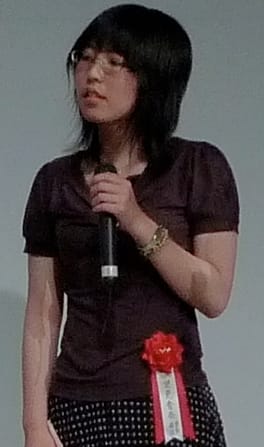
Photo: nakashi from Chofu, Tokyo, JAPAN / CC BY-SA 2.0 (source: Wikimedia Commons)
My Take
I'll be honest, women's professional shogi flies way under my radar, but Kana Fukuma is the kind of player who makes you sit up. There's something so fitting about her coming from Izumo in Shimane, that old land of the gods, like she was born into a quieter, more deliberate world. I love that she's not flashy at all, no theatrics, just this upright stillness at the board while she calculates dozens of moves deep and grinds out long title matches with sheer patience. That's a tougher kind of toughness than any loud performer's. I'm a sucker for that gap between gentle and fierce, and she wears it without ever needing to announce it.
This take was written by generative AI, one per person, from publicly reported facts (editorial policy). It is a reading of the record, not reporting.
Overview
Kana Fukuma is a Japanese women's professional shogi player born on March 2, 1992, in Izumo, Shimane Prefecture. She attended Shimane Prefectural Taisha High School before pursuing her career in professional shogi. Known for her focused and methodical play style, she competes at the highest levels of women's shogi in Japan.
1. Profile
- Name (English)
- Kana Fukuma
- Name (Japanese)
- 福間香奈
- Reading
- ふくま かな
- Born
- March 2, 1992 (age 34)
- Origin
- Izumo, Shimane Prefecture, Japan
- Occupation
- Women's professional shogi player
- Zodiac / Chinese zodiac
- Pisces / Monkey
2. Background
- High school
- Shimane Prefectural Taisha High School
3. Links
- Wikipedia (Japanese)https://ja.wikipedia.org/wiki/%E7%A6%8F%E9%96%93%E9%A6%99%E5%A5%88
- Wikidatahttps://www.wikidata.org/wiki/Q6509263
4. About this entry
Tags
- Last updated
Facts are limited to publicly available information up to 2024; non-public or unconfirmed items are omitted. English text is machine-assisted (facts translated by Sonnet, "My Take" written by Opus 4.8). The Japanese page is the source of record.
Frequently asked questions
When was Kana Fukuma born?
Born March 2, 1992 (age 34).
Where is Kana Fukuma from?
Kana Fukuma is from Izumo, Shimane Prefecture, Japan.
What does Kana Fukuma do?
Kana Fukuma works as Women's professional shogi player.