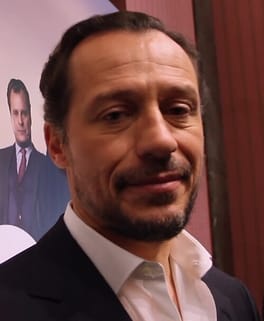
Photo: Lega Nerd / CC BY 3.0 (source: Wikimedia Commons)
Stefano Accorsi, born on March 2, 1971 in Bologna, Province of Bologna, Italy, is a stage actor, film actor and film director. That puts Stefano Accorsi at 55 years old in 2026. Listed accolades include Volpi Cup for Best Actor (2002), David di Donatello for Best Actor (1999), Flaiano Prize and 3 more.
My Take
Stefano Accorsi is a name that makes Italian film lovers nod. The Bologna-born actor won the David di Donatello for Best Actor in 1999 and the Volpi Cup at Venice in 2002, and France made him a Chevalier des Arts et des Lettres on top of that, real, cross-border recognition. You can feel the stage training underneath his screen work; it's where that gravity comes from. What I respect most is that he hasn't coasted on the trophies: moving into directing shows an appetite to widen his own range rather than repeat himself. He brings a worn, understated Bolognese charisma that the camera quietly loves.
This take was written by generative AI, one per person, from publicly reported facts (editorial policy). It is a reading of the record, not reporting.
1. Profile
- Name (English)
- Stefano Accorsi
- Name (Japanese)
- ステファノ・アコルシ
- Reading
- すてふぁの・あこるし
- Born
- March 2, 1971 (age 55)
- Origin
- Bologna, Province of Bologna, Italy
- Occupation
- stage actor / film actor / film director
- Zodiac / Chinese zodiac
- Pisces / Boar
2. Background
Awards & achievements
- 2002 Volpi Cup for Best Actor
- 1999 David di Donatello for Best Actor
- Flaiano Prize
- Ciak d'oro - Best Lead Actor
- Chevalier des Arts et des Lettres
- Nastro d'Argento for Best Actor
3. Links
- Official sitehttp://www.stefanoaccorsiofficial.com/
- Wikipedia (English)https://en.wikipedia.org/wiki/Stefano%20Accorsi
- Wikipedia (Japanese)https://ja.wikipedia.org/wiki/%E3%82%B9%E3%83%86%E3%83%95%E3%82%A1%E3%83%8E%E3%83%BB%E3%82%A2%E3%82%B3%E3%83%AB%E3%82%B7
- Wikidatahttps://www.wikidata.org/wiki/Q433565
4. About this entry
Tags
- Last updated
Facts are limited to publicly available information up to 2024; non-public or unconfirmed items are omitted. English text is machine-assisted (facts translated by Sonnet, "My Take" written by Opus 4.8). The Japanese page is the source of record.
Frequently asked questions
When was Stefano Accorsi born?
Born March 2, 1971 (age 55).
Where is Stefano Accorsi from?
Stefano Accorsi is from Bologna, Province of Bologna, Italy.
What does Stefano Accorsi do?
Stefano Accorsi works as stage actor, film actor, film director.
Stage actor — see all → · Film actor — see all → · More people from Italy →